- TEL : 01277 890 783
- EMAIL : sales@southgatetimber.co.uk
- Collections Monday to Friday 9:00 - 16:00






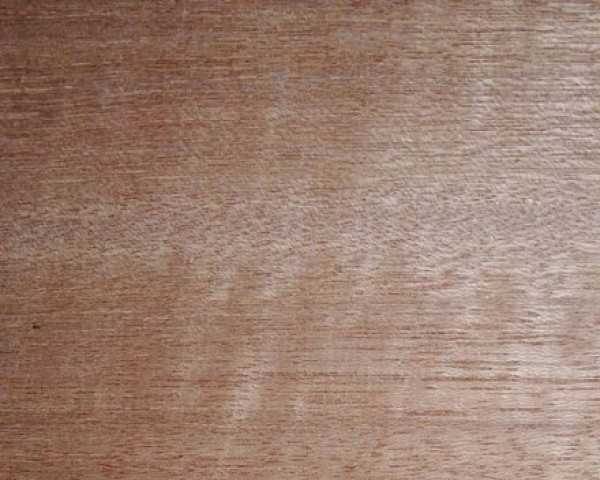
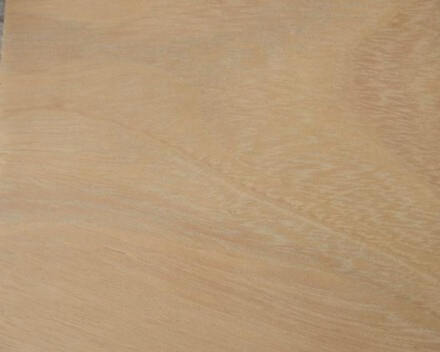
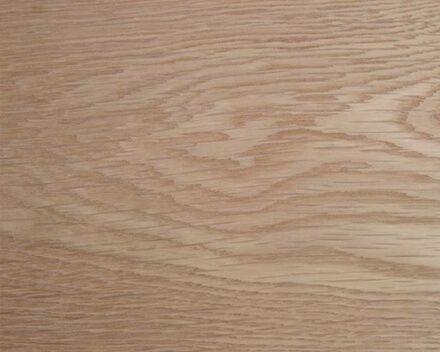
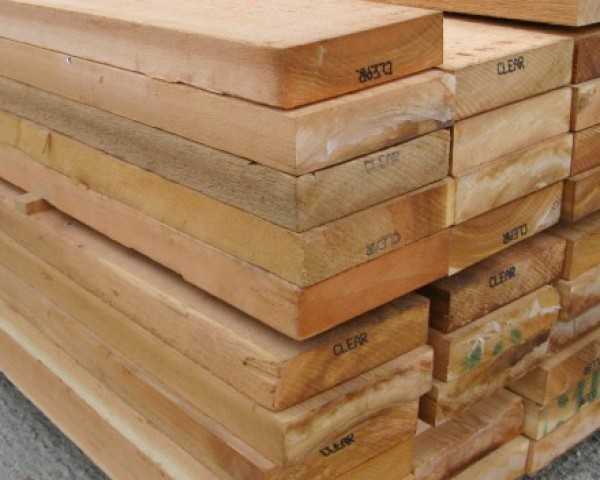
 Profiles
 Fast and friendly delivery service
 Samples available
 Click & Collect



-
-
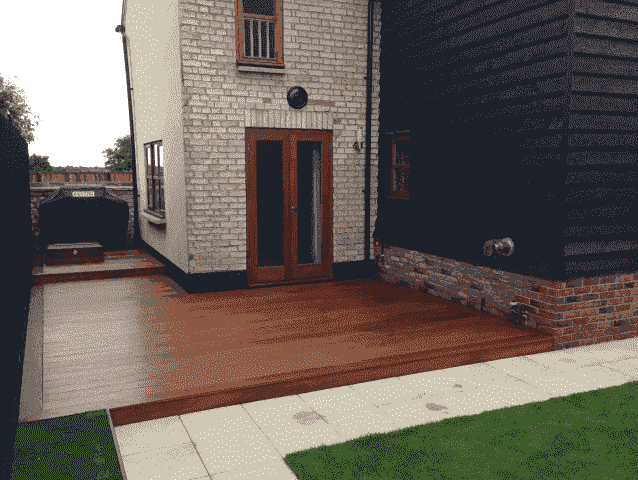
-
IPE Hardwood Decking ***FSC®***
-
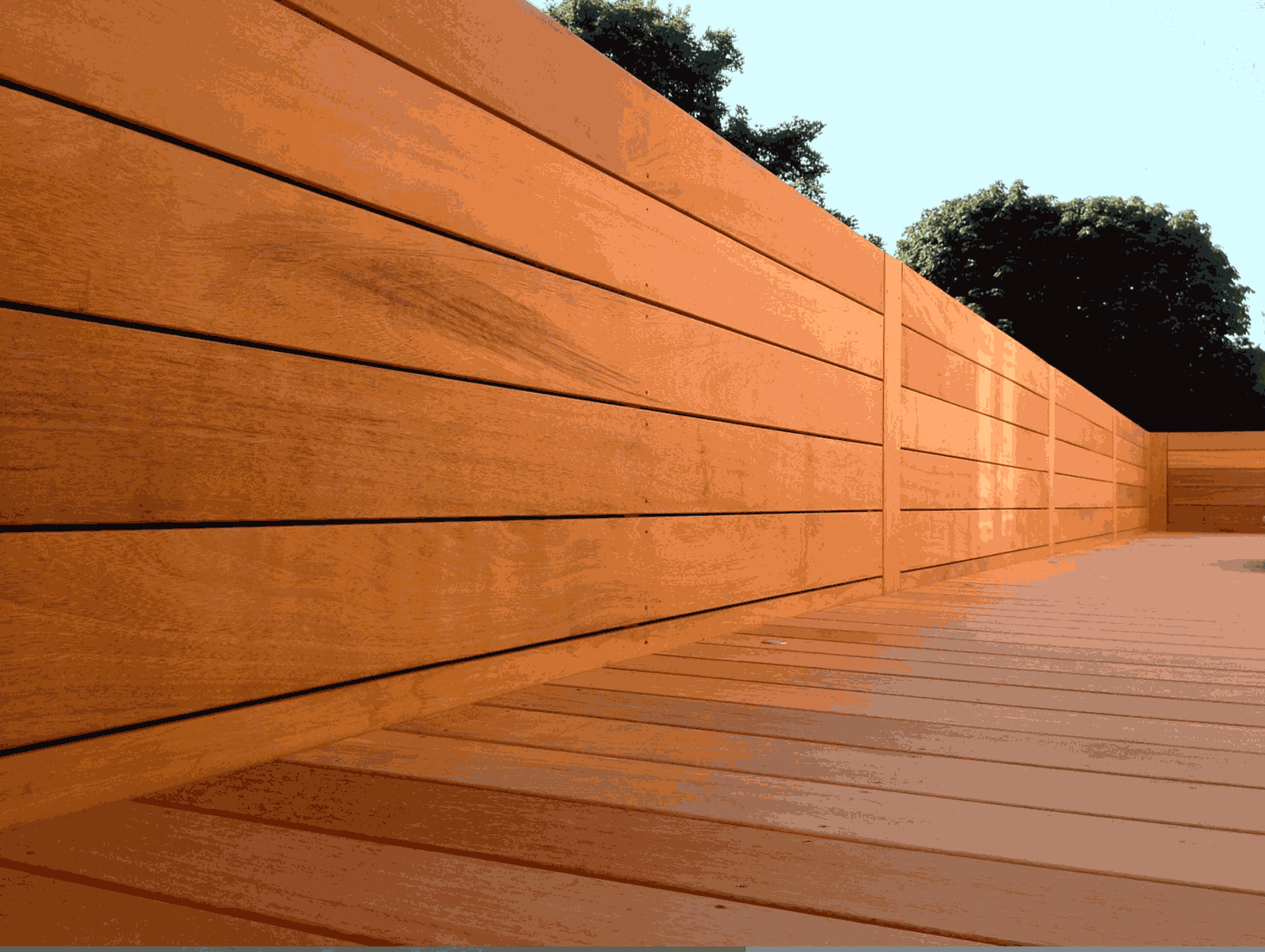
-
Iroko Hardwood Decking
-
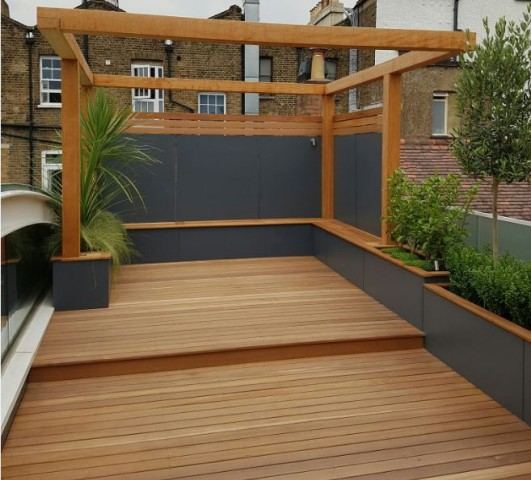
-
Yellow Balau Hardwood Decking ***FSC®*** & SVLK
-
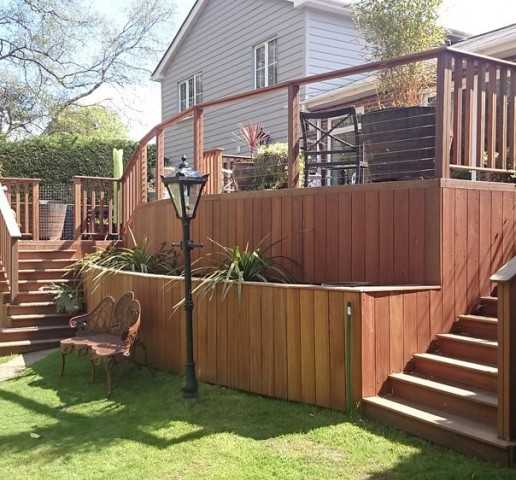
-
Yellow Balau Hardwood Components SVLK
-
-
Jatoba Hardwood Decking ***FSC®***
-

-
Thermory Benchmark Thermo-Ash Decking
-
-
Thermowood Pine Decking PEFC
-
-
Tali Hardwood Decking ***FSC®***
-
-
Thermory Spruce Decking PEFC
-
-
-
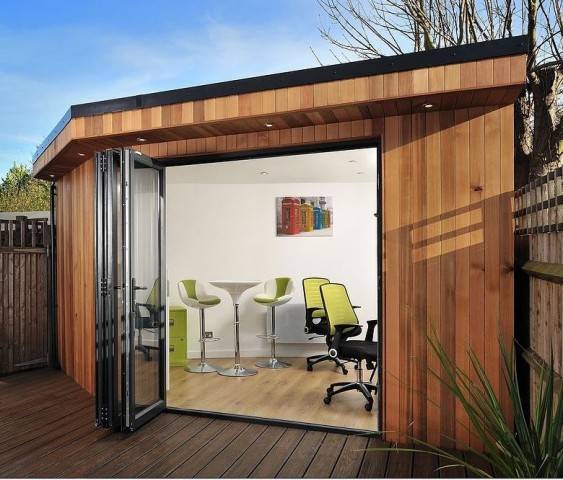
-
Western Red Cedar Cladding PEFC
-
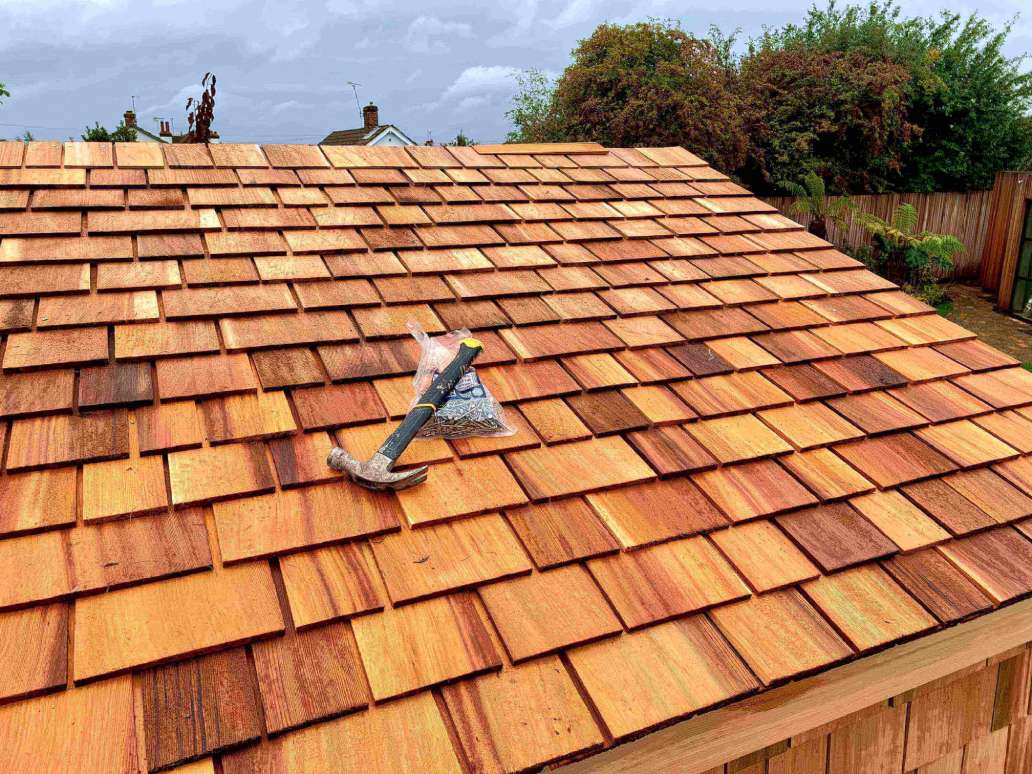
-
Cedar Shingles & Ridge Tiles PEFC
-
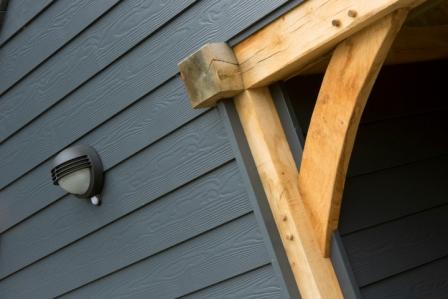
-
Cedral Cement Board Cladding
-
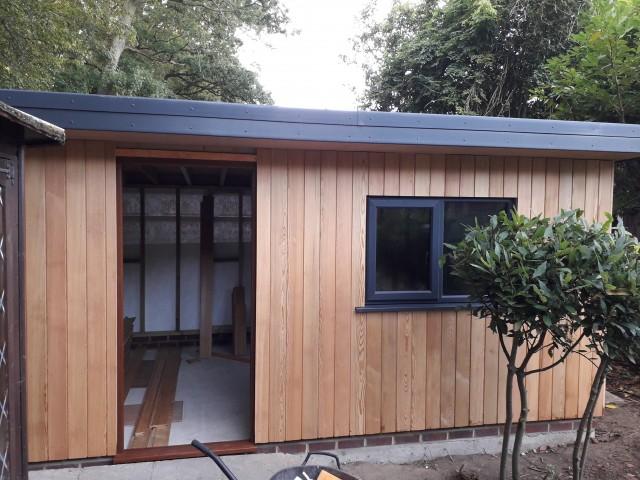
-
Larch Cladding ***FSC®*** & PEFC
-
-
Douglas Fir Cladding PEFC
-
-
Thermo Ayous Cladding
-
-
Thermowood Pine Cladding PEFC
-
.jpg)
-
Black Cladding PEFC
-

-
Far Eastern Hardwood Cladding PEFC & SVLK
-

-
Thermory Radiata Pine Cladding ***FSC®***
-
-
Thermory Thermo-Ash Cladding
-

-
Thermory Thermo-Ash Decor Rhomb Tiles Internal
-
- SAUNA
- SLEEPERS
-
-
-
Osmo Treatment & Accessories
-
-
Owatrol Treatment & Accessories
-

-
Thermory Treatment & Fixings
-
-
Deckwise Hidden Fixings & Accessories
-
-
Decking Accessories
-
-
Spax Specialist Decking Screws
-
-
Spax Stainless Steel Facade Screws
-
-
Spax Construction Screws
-

-
Stainless Steel Nails
-
-
Paslode Stainless Steel Brads
-
-
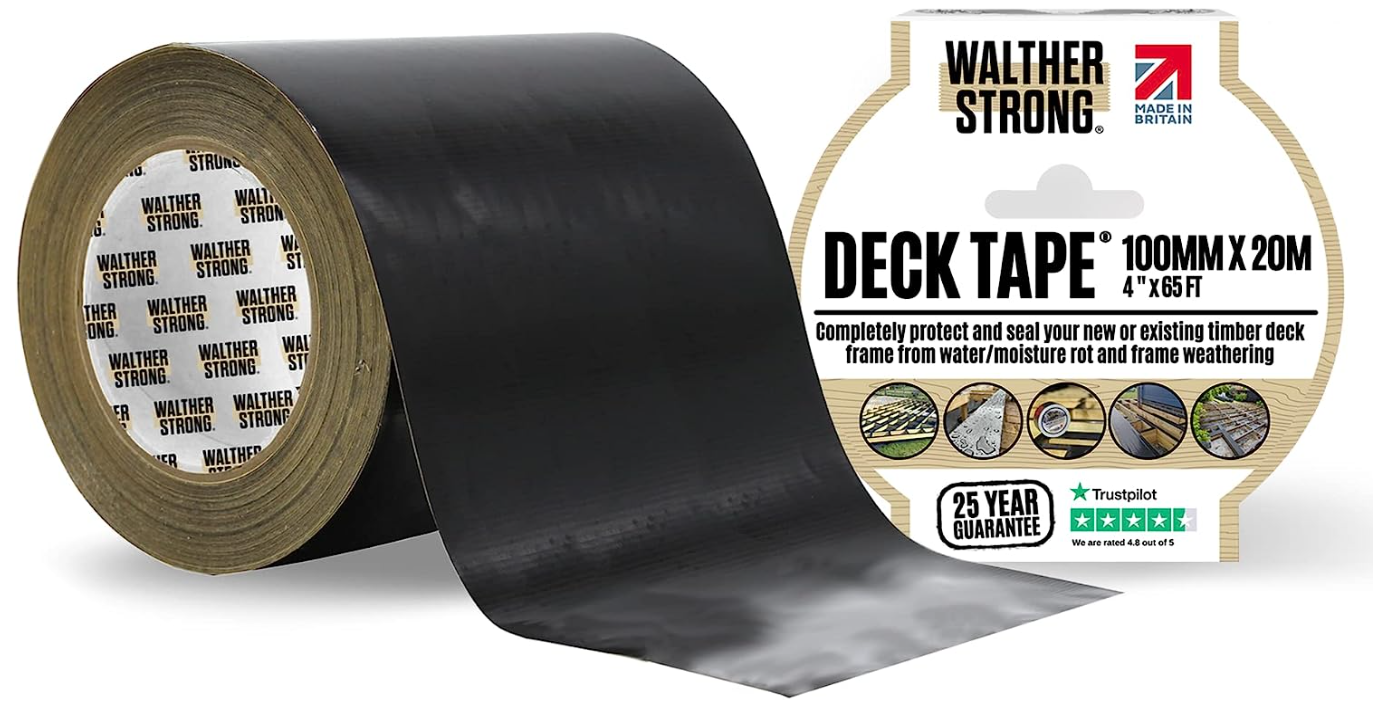
Walther Strong Deck Tape
-
-
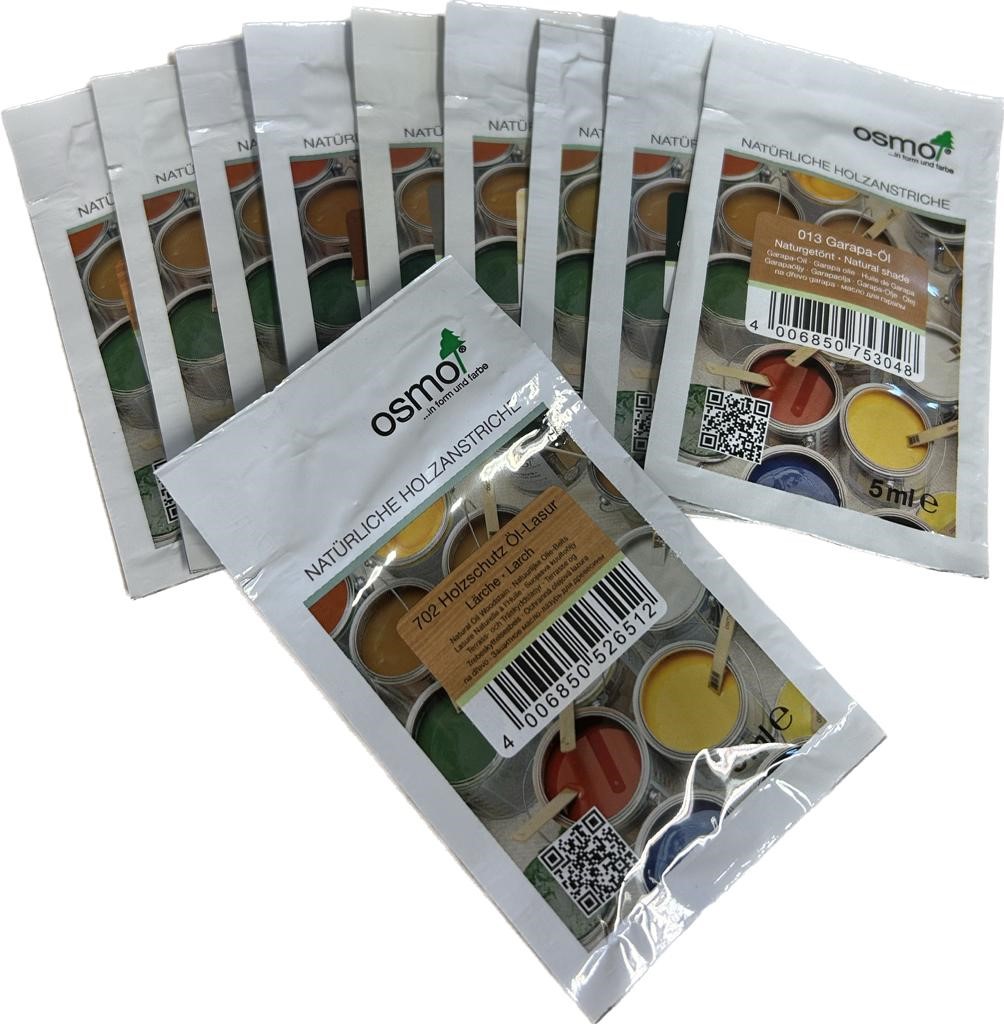
Treatment Samples
-
-
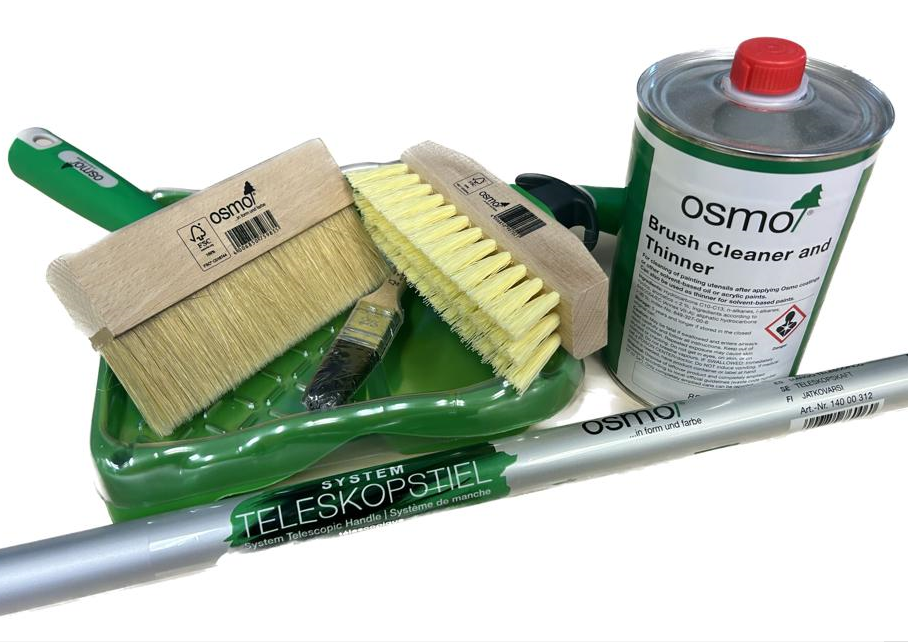
Brushes & Application Tools
-
-
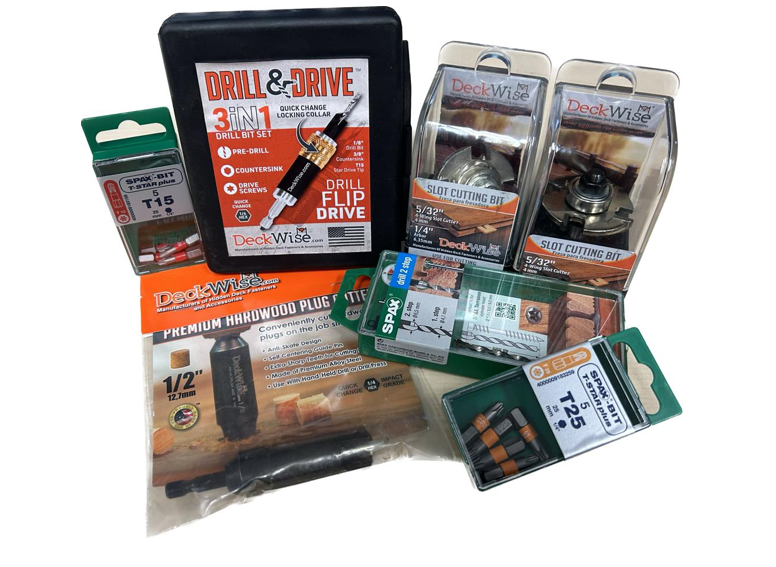
Drive Bits Router Bits & Plug Cutters
-
-
Cedral Accessories
-
- SAMPLES

The Ultimate Guide to Tali Hardwood Decking

by
Southgate Timber
July 31, 2026
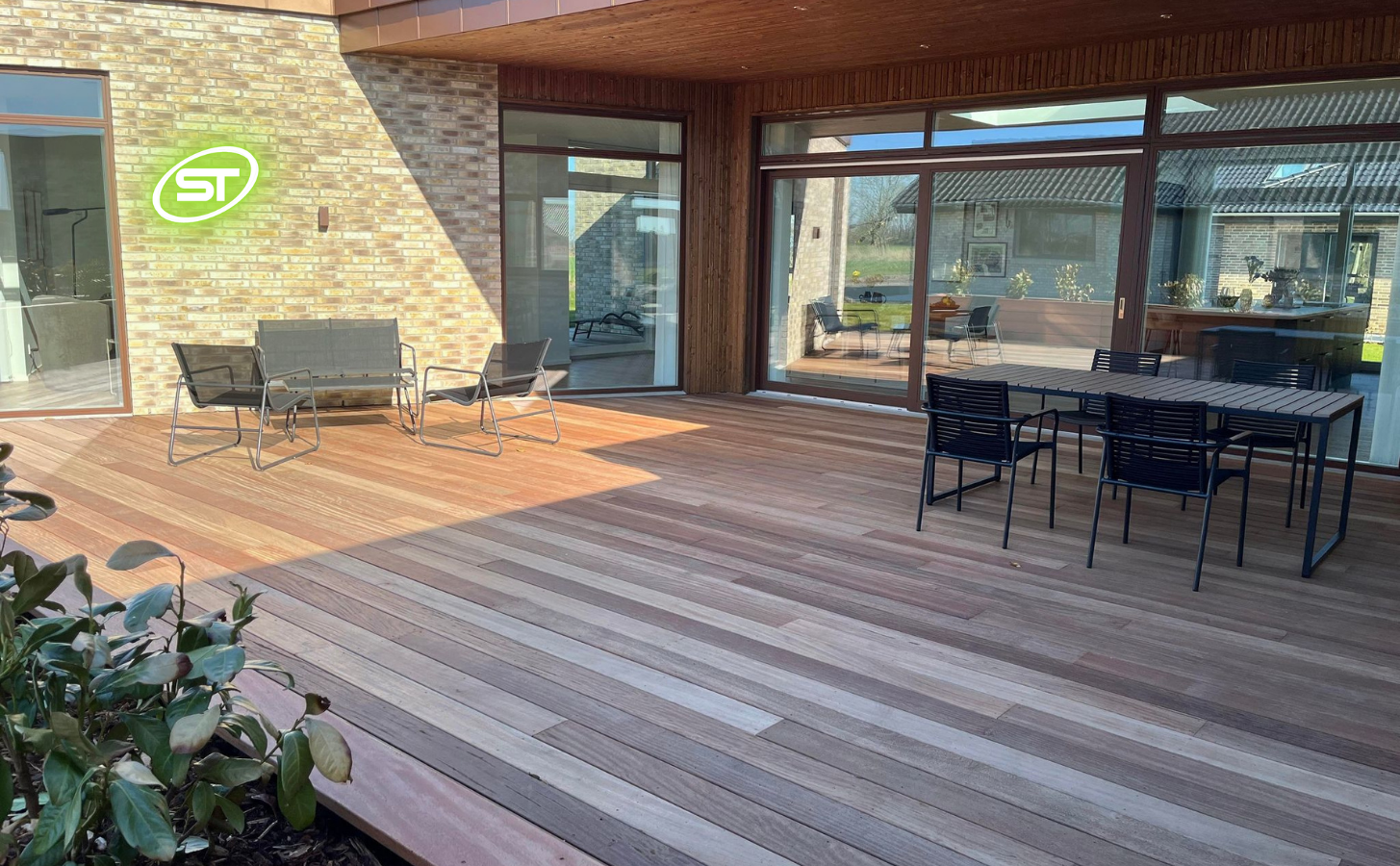


For the longest time now, Ipe has been the benchmark for hardwood decking, considered the strongest, densest option on the market, and the one everyone else gets measured against. But the licences to fell it responsibly are becoming harder to come by. Ipe was added to CITES Appendix II, meaning every shipment now needs an export permit confirming the harvest was legal and sustainable, and UK imports require the same CITES paperwork. The result is slower, tighter supply, and UK stock that’s steadily dwindling. That’s left a genuine gap at the top of the market for a contender to take Ipe’s place, and Tali is increasingly being marketed as exactly that. In this guide we’ll cover what Tali actually is, how it looks, what it costs, the sizes and profiles we stock, how to handle and fit it, ongoing maintenance, sustainability credentials, and how to place an order.
What is Tali hardwood?
Tali is a dense tropical hardwood grown across West and Central Africa. It’s been used for generations in heavy-duty outdoor applications like bridges, harbour works, boardwalks, thanks to a natural resistance to rot, insects and even marine borers that few timbers can match. In recent years, it’s become a serious decking option in its own right, largely because it performs so similarly to Ipe while remaining fully FSC certified and free of the export restrictions now affecting other tropical hardwoods.
Structurally, Tali sits high in strength, with a density in the region of 900kg/m³, and it carries a Class 1 durability rating, the highest classification a timber can achieve, putting it in the same bracket as Ipe for resistance to rot, insects and the weather. Our stock is kiln dried to circa 12 – 15%, giving you a stable board that’s ready to work with rather than needing time to season on site. In plain terms: this is a heavy, exceptionally hard-wearing board built for decades of outdoor use, not a handful of summers.
Appearance
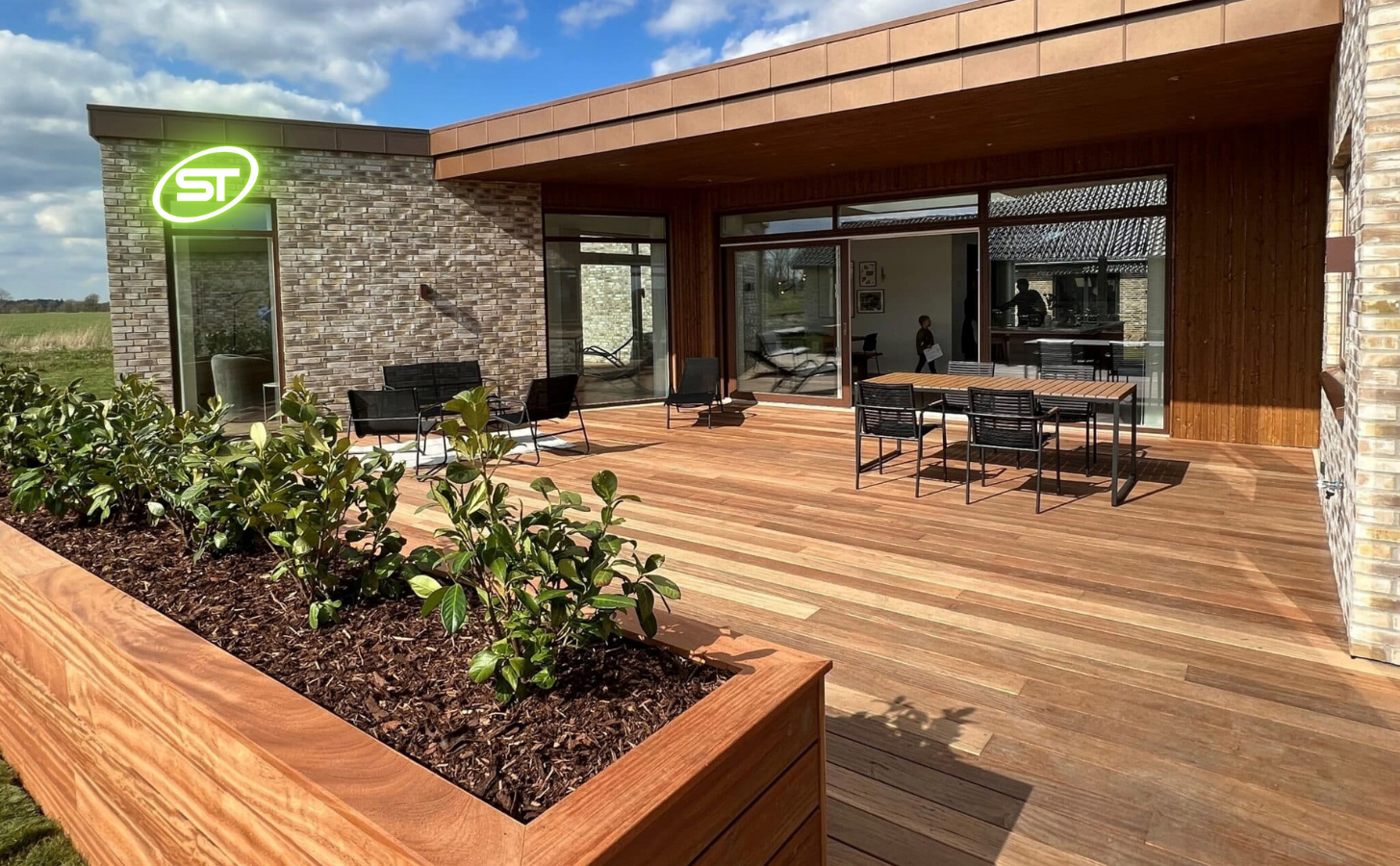
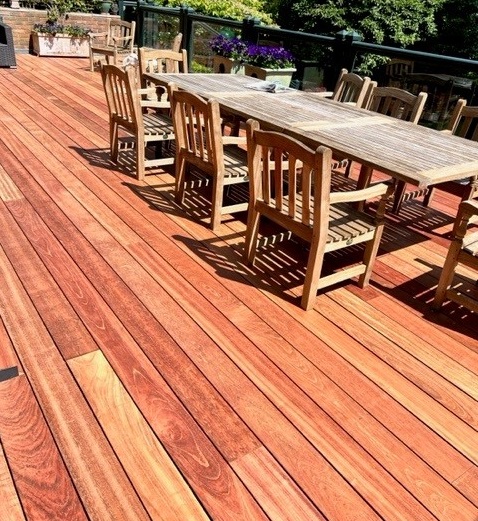
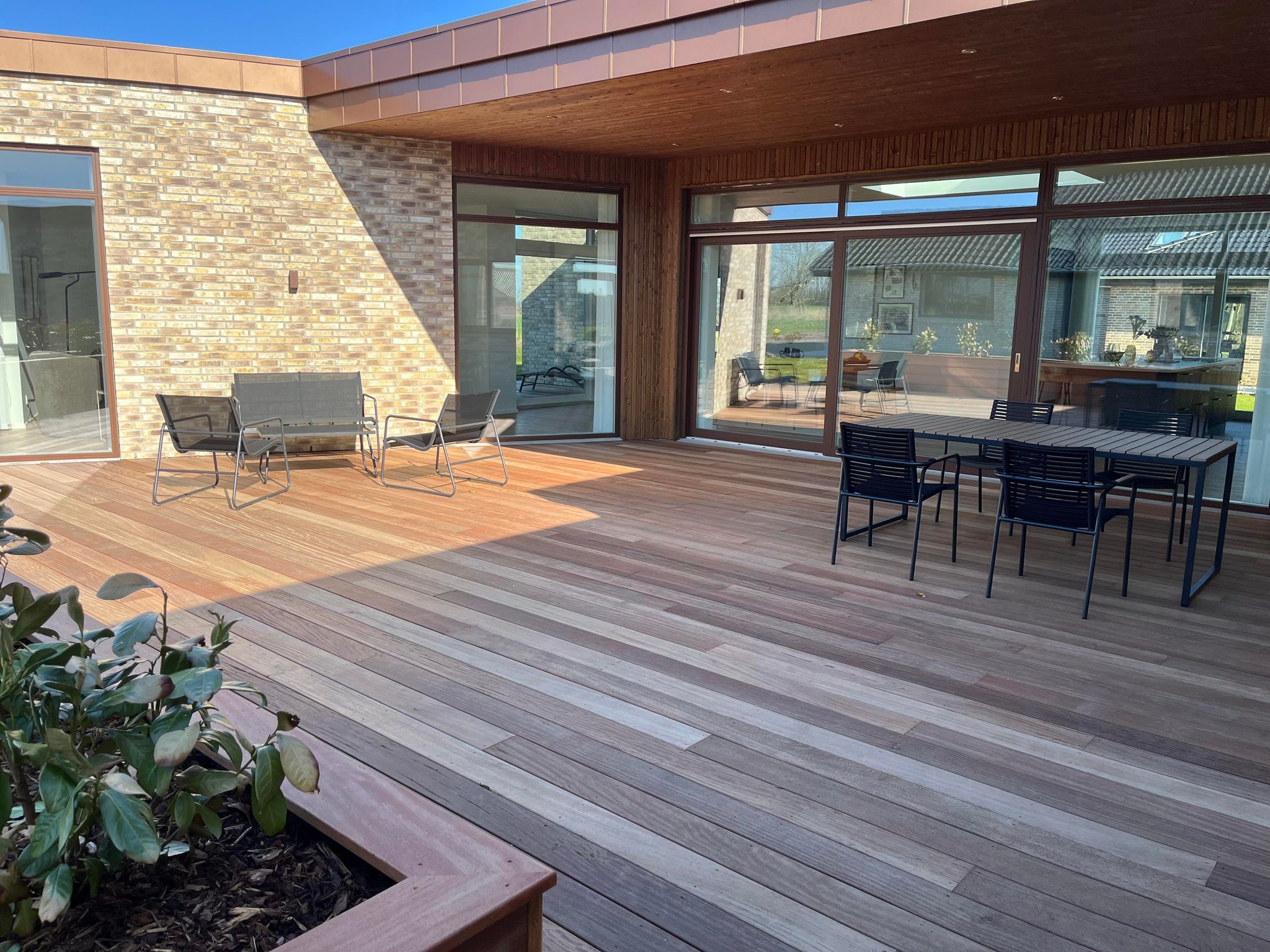
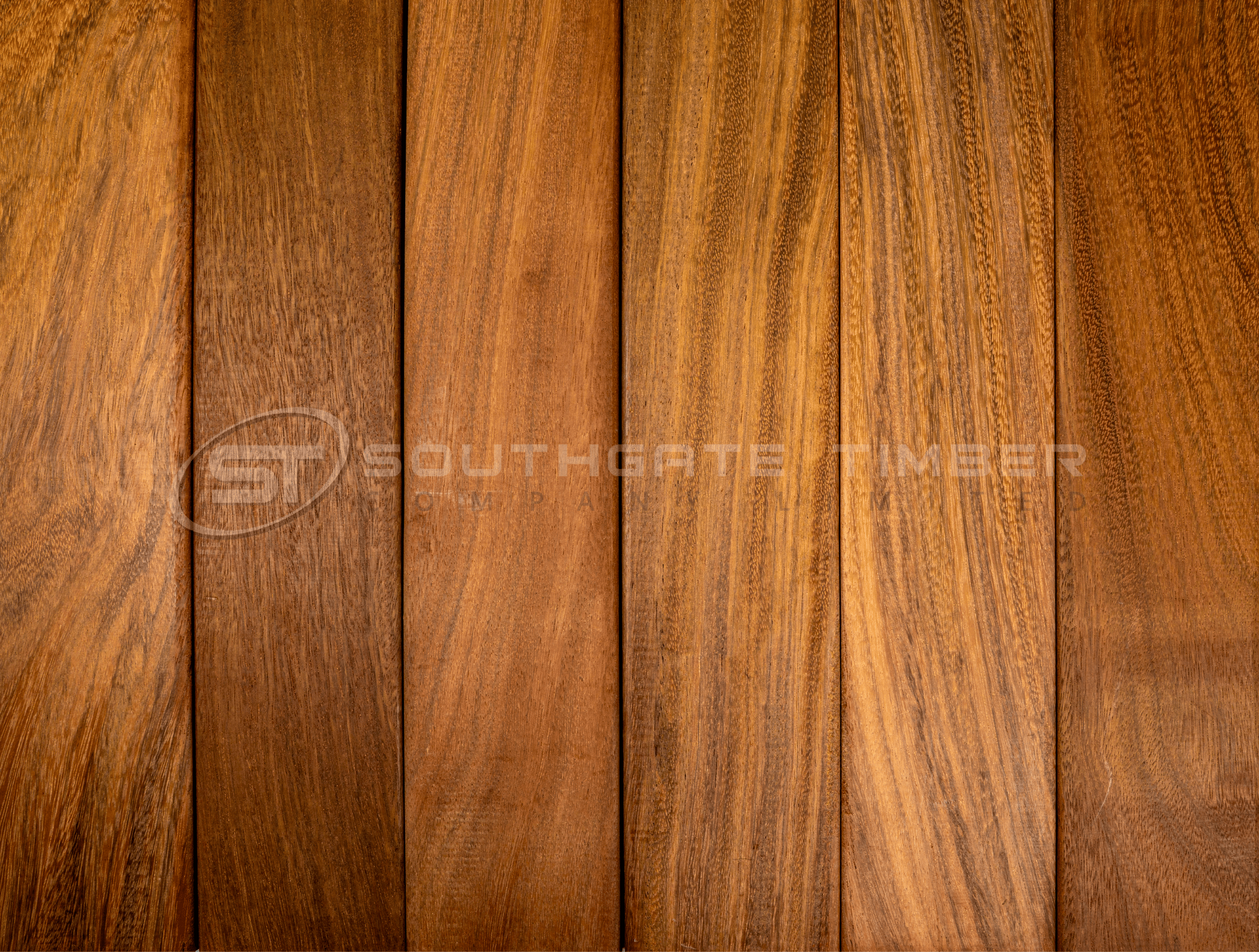
Tali offers a huge range of colour within a single species, spanning light through to dark across a broad spread of hues and tones, so you get the full character and variation that real timber has to offer. The grain is similarly varied, often running in a distinctive striped, almost zebra-like pattern that gives each board real visual interest.
Our Tali is supplied to FAS grading, effectively 90% Grade A with the remainder Grade A/B, so you’re getting boards that are almost entirely free of knots, pinworm and splits, with very little twisting or cupping. It’s a genuinely premium grade, and it shows in the finished deck.
Cost
Tali sits as a genuine mid-to-premium option, priced below Ipe, but firmly in hardwood decking territory rather than softwood, very comparable to the pricing of cost effective hardwoods like Yellow Balau. Given the current pressure on Ipe availability, it's increasingly the more cost-stable choice of the two for anyone planning ahead. For current pricing across our full range of sizes and profiles, head to the Tali Hardwood Decking category page among our decking range, where pricing is shown per length.
Sizes and profiles
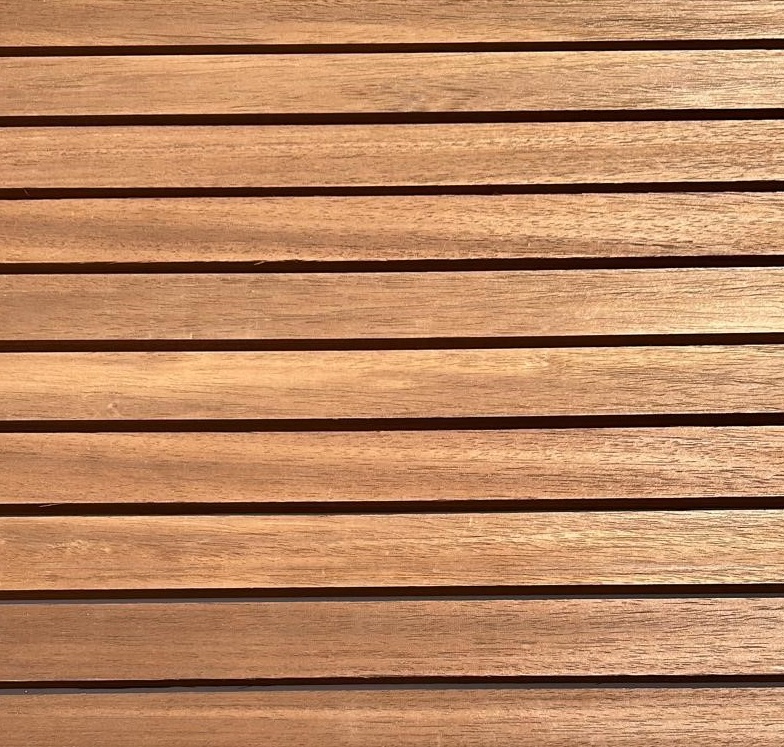
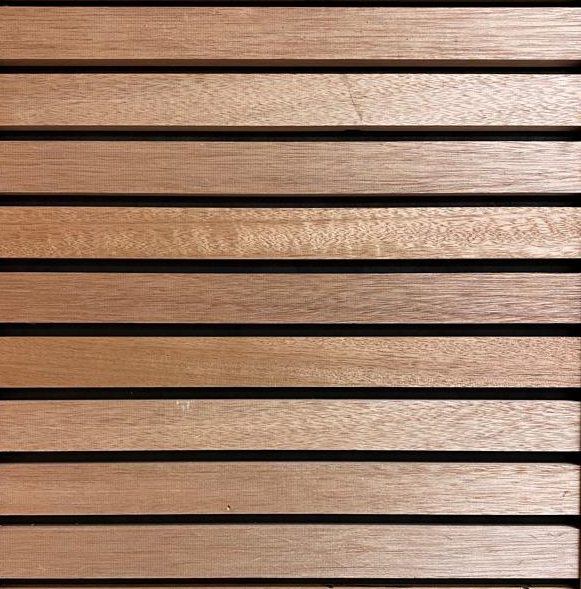
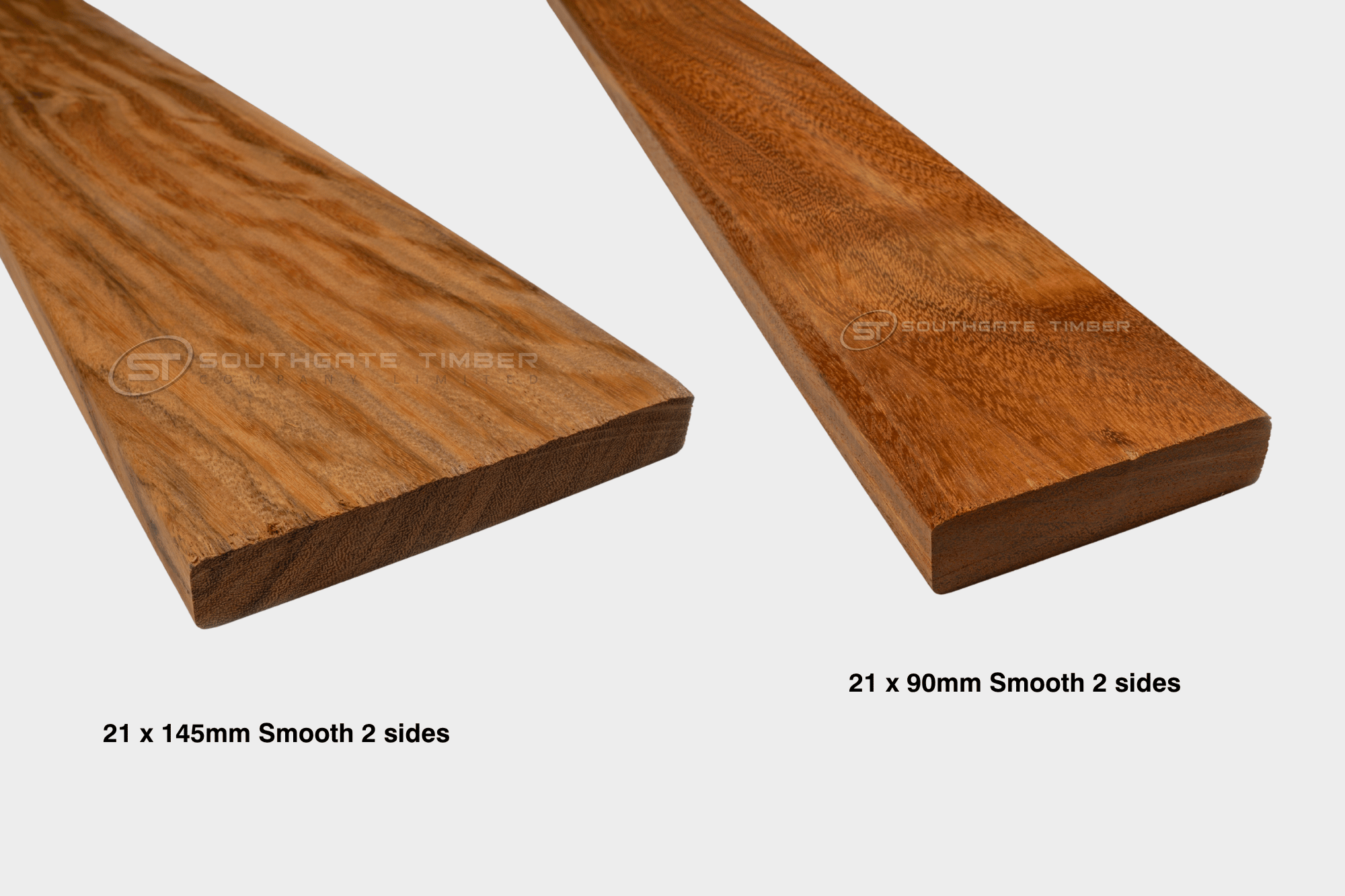
We currently stock Tali in two sizes, both machined smooth on two sides with slightly rounded corners:
Both sizes are stocked in a range of lengths, and both are in stock for click & collect or quick delivery. If you’re unsure which width or length suits your project, our team can talk you through it, just get in touch.
Handling and fitting
Tali’s density is exactly what gives it such outstanding durability, but it does mean it needs to be treated differently to a softer decking timber on site.
- Build on a fixed subframe – Tali should always be fitted over a solid, fixed subframe, 50 x 150mm joists, for example. Use a softwood joist and the frame underneath will rot long before the Tali decking above it ever will, so it’s worth getting the subframe spec right from the start.
- Fixing centres – Fix boards every 400 – 500mm at each joist, using two screws through the face per joist.
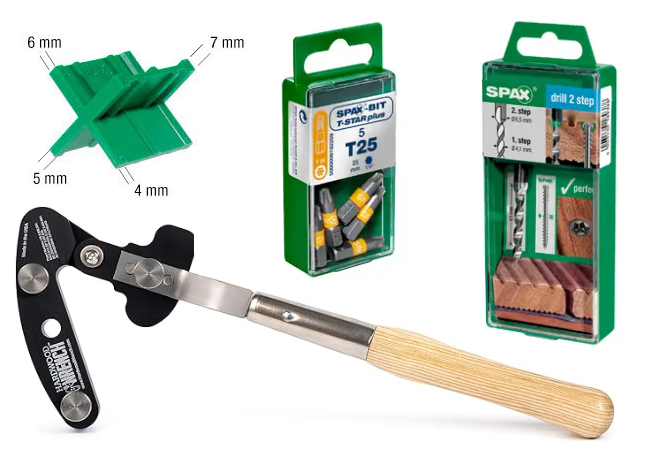
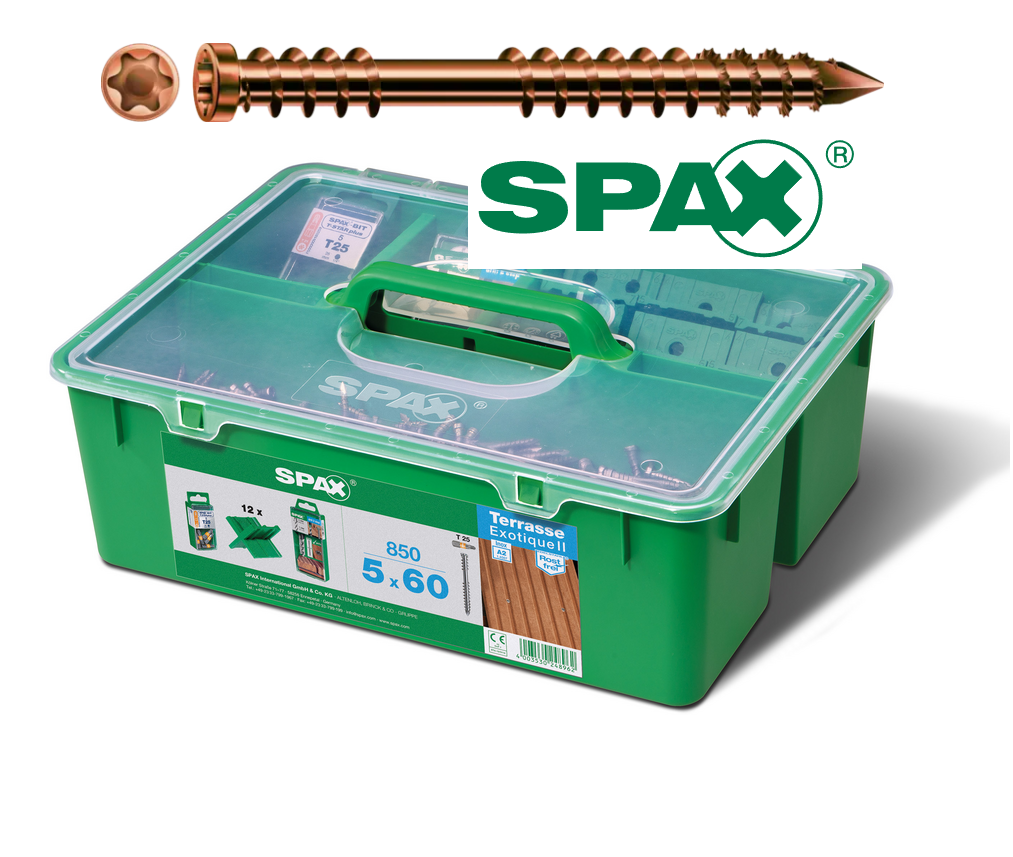
- Pilot holes and countersinking – Drill into the face first with a Spax step drill bit to create the pilot hole and countersink in one process, then drive your Spax screw 5.0 x 60mm in afterwards with T25 torque bit. The step drill cuts the countersink and pilot hole in a single pass, shaped perfectly to match the T25 head on Spax screws.
- Use stainless steel fixings – This isn’t optional! Any fixing that isn’t stainless steel risks reacting with the tannins in the timber and leaving unsightly black staining around the fixing points. We recommend Spax: the quality is excellent and they leave a clean, tidy finish.
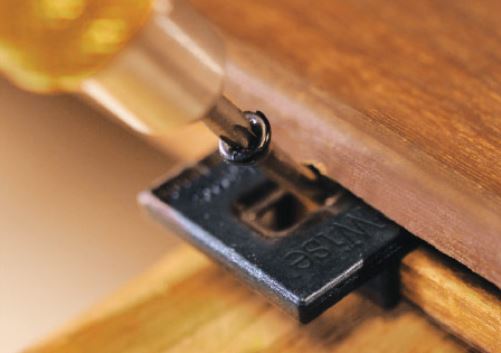
- Hidden fixings – If you’d rather not see any fixings at all, Tali boards can be hidden-fixed using a Deckwise slot cutter router bit, machining a groove into the side of each board at every joist crossing. We stock both a ¼” and ½” drive Deckwise slot cutters to suit varied routers.
It’s more demanding to work than a softwood or a thermally modified deck board, but nothing a competent installer with the right tools can’t handle, and the payoff is a deck that needs very little structural attention for years afterwards.
Maintenance
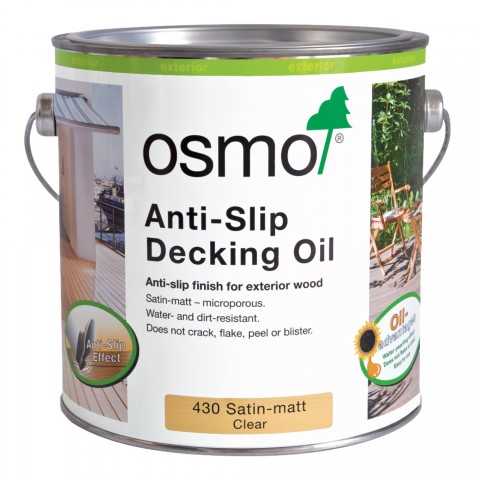
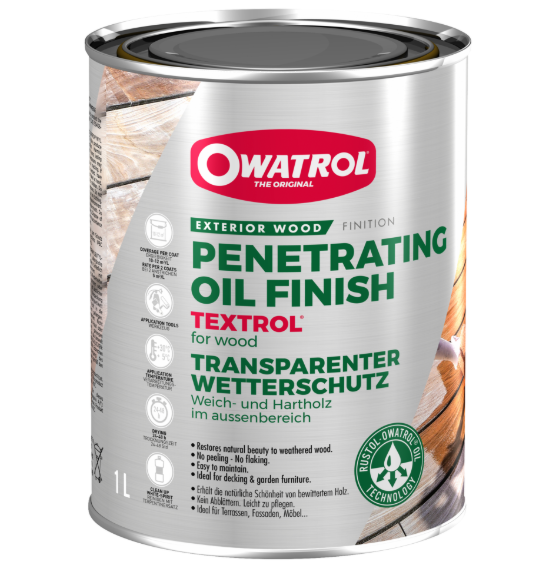
Tali is naturally durable enough to just need a regular every 12 – 18 months or so. Like with any decking – dirt, grime, and mildew can build up on the surface, so a simple clean with a pressure washer along with a patio cleaner head will remove all this and keep your decking fresh for years to come. Ensure you do this on a low pressure and not too close to the surface of the wood. Tali hardwood decking can be left untreated to naturally develop an attractive silver-grey patina over time, or it can be oiled to help preserve its rich colour. If you want to maintain its original appearance, Southgate Timber recommends applying a quality decking oil such as Owatrol Textrol Clear or Owatrol Textrol HES Clear, depending on your preferred finish. If your decking has already weathered and turned grey, it can first be restored using Owatrol Prepdeck followed by Owatrol Net-Trol before applying a fresh coat of oil. Regular cleaning and periodic re-oiling will help keep your Tali decking looking its best while providing protection against UV exposure and moisture.
Sustainability
All the Tali we supply is FSC certified, sourced from responsibly managed forests in Central and West Africa. Unlike some comparable tropical hardwoods, Tali isn't currently listed under CITES, meaning it isn't subject to the same trade restrictions, but we'd always recommend sticking with FSC-certified stock regardless, as it's the clearest guarantee that what you're buying has been legally and responsibly harvested.
FAQs
Is Tali a good alternative to Ipe?
Yes. Tali is very close to both in density, durability and appearance, and it's fully FSC certified with none of the current sourcing pressure affecting Ipe. Most customers choose between them on budget and colour preference rather than performance.
Does Tali decking need to be oiled?
No, not for protection. It’s naturally resistant to rot and insects and can be left completely untreated, weathering to a silvery-grey over time. Oiling is purely to maintain the original reddish-brown colour, so it's optional.
How long does Tali decking last?
Given its strength class and natural durability, a well-fitted Tali deck can be expected to perform for decades with only cosmetic maintenance, provided it's installed correctly with appropriate drainage and ventilation.
Is Tali hard to work with?
It's harder than softwood or thermally modified decking, so pre-drilling and carbide-tipped tooling are essential. It's well within reach of any competent installer, it just isn't a timber to fit without the right kit.
Is Tali decking slippery?
Like any hardwood, a smooth-faced board can get slippery when wet. We stock reeded/grooved profiles for anyone prioritising extra grip, particularly around pools, steps or shaded areas.
Is Tali FSC certified?
Yes, all the Tali we supply is FSC certified and sourced from responsibly managed forests in Central and West Africa.
Ordering
Ready to move ahead? You can browse full sizes, profiles and current pricing on our Tali Hardwood Decking page. Samples are available if you'd like to see the timber in person before committing, and our team is on hand by phone or email if you've got questions about quantities, fixings, or fitting, just get in touch and we'll help you get it right first time.
Still unsure? Watch our video here for a full walkthrough of everything covered in this guide.

General