- TEL : 01277 890 783
- EMAIL : sales@southgatetimber.co.uk
- Collections Monday to Friday 9:00 - 16:00






 Profiles
 Fast and friendly delivery service
 Samples available
 Click & Collect



-
-
-
IPE Hardwood Decking ***FSC®***
-
-
Iroko Hardwood Decking
-
-
Yellow Balau Hardwood Decking ***FSC®*** & SVLK
-
-
Yellow Balau Hardwood Components SVLK
-
-
Jatoba Hardwood Decking ***FSC®***
-

-
Thermory Benchmark Thermo-Ash Decking
-
-
Thermowood Pine Decking PEFC
-
-
Tali Hardwood Decking ***FSC®***
-
-
Thermory Spruce Decking PEFC
-
-
-
-
Western Red Cedar Cladding PEFC
-
-
Cedar Shingles & Ridge Tiles PEFC
-
-
Cedral Cement Board Cladding
-
-
Larch Cladding ***FSC®*** & PEFC
-
-
Douglas Fir Cladding PEFC
-
-
Thermo Ayous Cladding
-
-
Thermowood Pine Cladding PEFC
-

-
Black Cladding PEFC
-

-
Far Eastern Hardwood Cladding PEFC & SVLK
-

-
Thermory Radiata Pine Cladding ***FSC®***
-
-
Thermory Thermo-Ash Cladding
-

-
Thermory Thermo-Ash Decor Rhomb Tiles Internal
-
- SAUNA
- SLEEPERS
-
-
-
Osmo Treatment & Accessories
-
-
Owatrol Treatment & Accessories
-

-
Thermory Treatment & Fixings
-
-
Deckwise Hidden Fixings & Accessories
-
-
Decking Accessories
-
-
Spax Specialist Decking Screws
-
-
Spax Stainless Steel Facade Screws
-
-
Spax Construction Screws
-

-
Stainless Steel Nails
-
-
Paslode Stainless Steel Brads
-
-
Walther Strong Deck Tape
-
-
Treatment Samples
-
-
Brushes & Application Tools
-

-
Drive Bits Router Bits & Plug Cutters
-
-
Cedral Accessories
-
- SAMPLES

What Is the Best Wood for a Sauna? A UK Buyer’s Guide

by
Southgate Timber
August 28, 2026
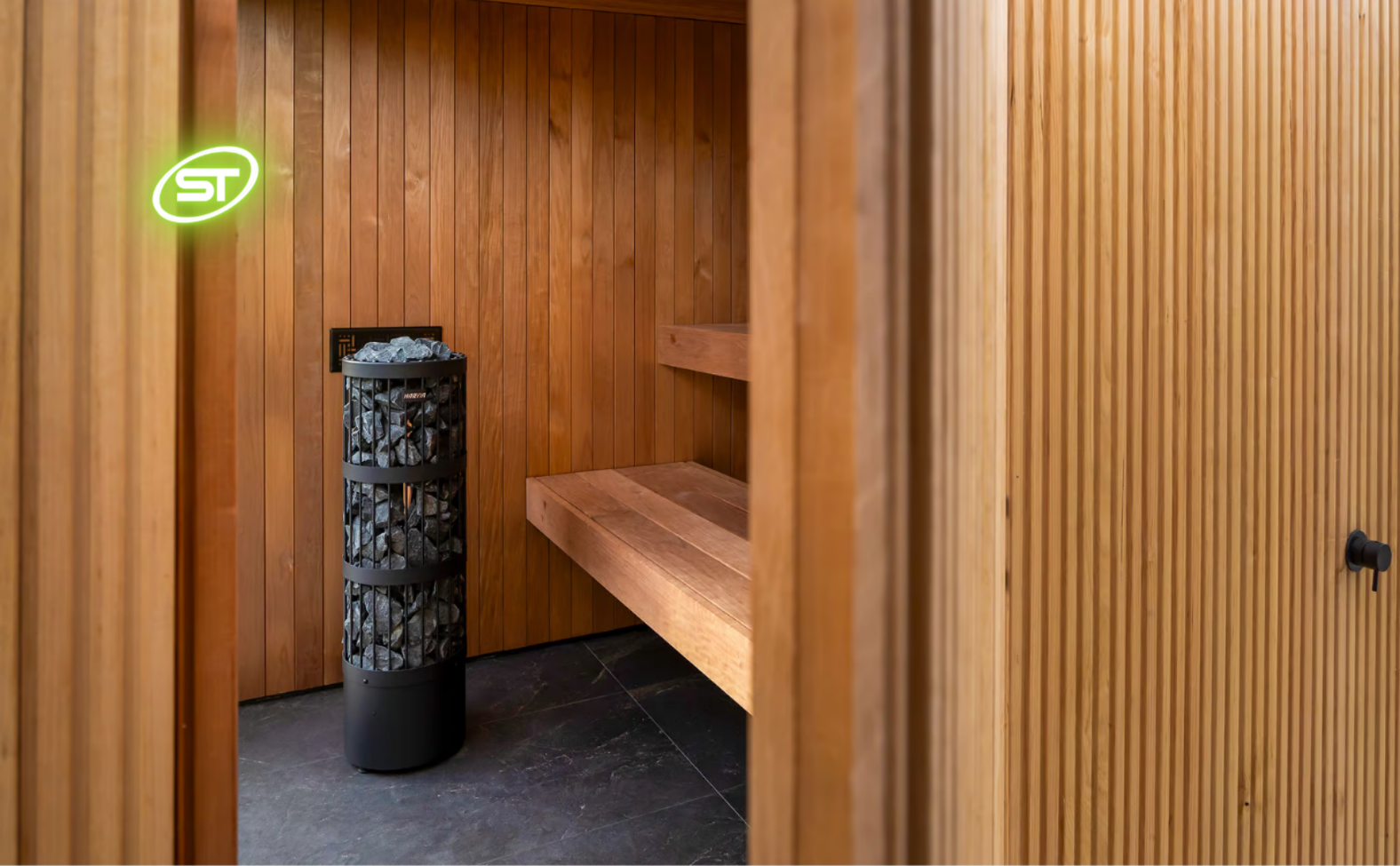


Building a sauna at home or working on a larger commercial sauna project? Choosing the right timber is one of the most important decisions you’ll make. Sauna timber has a pretty tough job. It needs to cope with repeated changes in heat and humidity, remain comfortable against bare skin and stay looking good without relying on paints or heavy finishes. That means the timber you might choose for decking, cladding or another outdoor project isn’t necessarily going to be right inside a sauna. So, what is the best wood for a sauna?
What wood is best for a sauna?
For sauna interiors, you’re generally looking for a timber that is:
- Low in resin
- Dimensionally stable
- Smooth and comfortable against the skin
- Able to cope with repeated changes in heat and humidity
- Low in thermal conductivity, so it remains comfortable to touch when exposed to the high temperatures found inside a sauna
Aspen and Thermo Aspen are both excellent choices for sauna interiors and are now both stocked at Southgate Timber. Other traditional sauna timbers include Alder, although it can be scarcer and more expensive to source. For us, Thermo Aspen remains an excellent all-round option. It combines the naturally low thermal conductivity of Aspen with the additional stability that comes from thermal modification, making it suitable for walls, ceilings, benches and backrests. Standard Aspen offers another option for sauna interiors. Its much lighter, almost white appearance will appeal to those looking for a brighter finish, while it also comes at a lower price point than Thermo Aspen.
Why Thermo Aspen works so well in a sauna
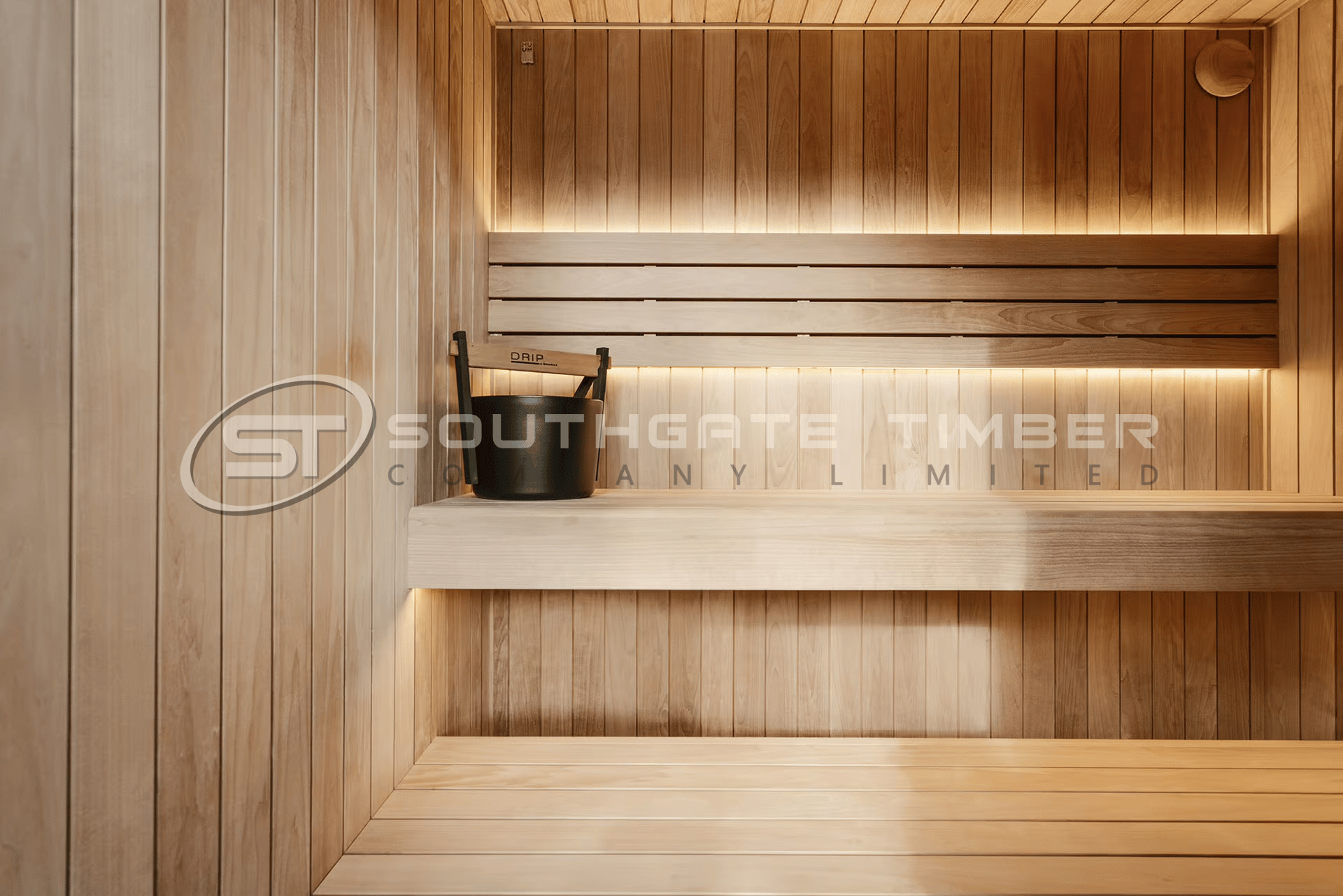
Thermo Aspen starts life as Aspen before undergoing a thermal modification process using heat and steam, without chemical treatment. This process significantly reduces the amount of moisture the timber absorbs and improves its dimensional stability. That matters in a sauna because the timber is constantly moving between very different conditions: cool when the sauna isn’t being used, then hot and humid when it is. Less moisture movement means a more stable board and less chance of unwanted movement over time.
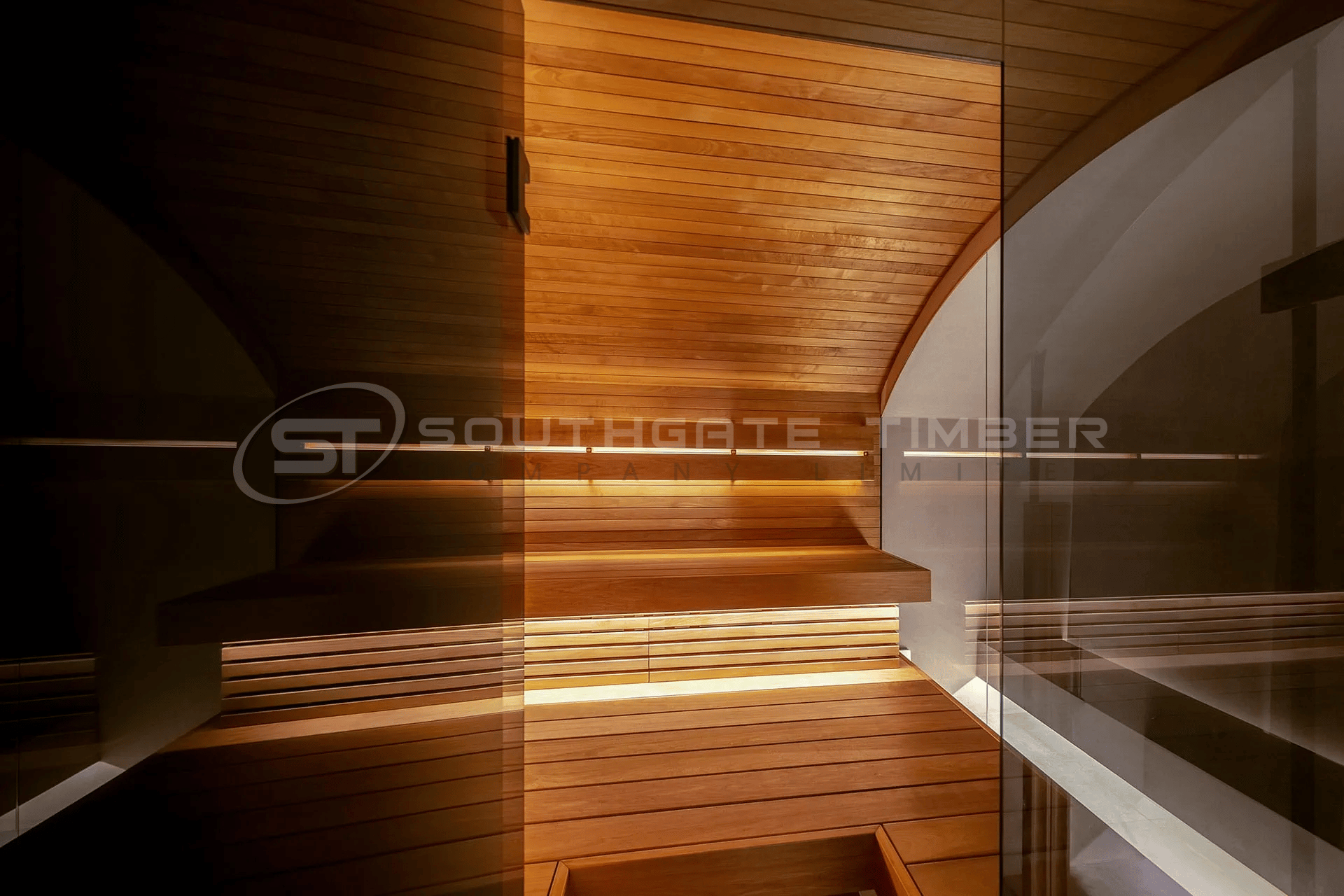
Thermo Aspen also has low thermal conductivity, meaning it doesn’t become excessively hot to the touch when exposed to high temperatures. This is particularly important for sauna benches and backrests, where the timber comes into direct contact with the skin. The thermal modification process also gives Thermo Aspen its distinctive warm, golden-brown appearance, rather than the much paler appearance of untreated Aspen.
If you’d like to know more about the process itself, take a look at our guide to thermally modified timber.
Thermo Aspen vs Aspen: which should you choose?
Both Thermo Aspen and standard Aspen are suitable options for sauna interiors, and Southgate Timber now stocks both. The biggest differences come down to stability, appearance, and budget.
Thermo Aspen
Suitable for: walls, ceilings, benches and backrests
Thermo Aspen is low in resin and thermal conductivity while offering excellent dimensional stability. Its warm colour also gives a sauna a contemporary, premium appearance. The thermal modification process reduces the timber’s moisture absorption, making it particularly stable through the repeated changes in temperature and humidity experienced inside a sauna.
Untreated Aspen
Suitable for: walls, ceilings and benches
Standard Aspen offers many of the characteristics that make Aspen so well suited to sauna environments, including low thermal conductivity and low resin content. Aspen is kiln dried to approximately 8% moisture content, giving it good dimensional stability, although not quite to the same level as Thermo Aspen.
One of the biggest differences is appearance. Standard Aspen is very light, almost white, whereas Thermo Aspen has a warmer, darker colour as a result of the thermal modification process. Some customers prefer the clean, light appearance of standard Aspen, while others favour the richer colour of Thermo Aspen, so much of the choice comes down to personal preference.
Standard Aspen also provides a more cost-effective option for customers who want a suitable sauna timber without stepping up to Thermo Aspen. Alder is another timber traditionally used for saunas and has a more detailed grain, but it tends to be scarcer to source and more expensive.
Sauna cladding and sauna bench slats aren’t the same thing
One of the easiest mistakes to make when ordering sauna timber is treating everything as simply “sauna wood”. The timber lining your walls and ceiling has a very different job from the timber you’re going to sit or lie on.
Sauna cladding
Sauna wall and ceiling cladding is relatively thin and profiled so that boards fit neatly together. Our sauna cladding is 15mm thick and uses a channel groove profile, giving you a clean finish that can be secret-fixed.
Sauna bench slats
Bench slats need to support weight, so they’re considerably thicker. Our sauna bench slats are 28mm thick, planed all round and have rounded edges to make them comfortable to sit and lie on. Using wall cladding to construct the benches might save some timber initially, but it isn’t designed for the job.
Our Thermo Aspen and Aspen sauna timber range
Our sauna timber range now includes both Thermo Aspen and standard Aspen, with cladding and bench slat profiles available in a choice of widths to suit different sauna designs and finishes.
Thermo Aspen:
- Thermo Aspen 15 x 90mm Channel Groove Cladding STS4
A versatile wall and ceiling cladding profile with the warm appearance and stability of thermally modified Aspen. - Thermo Aspen 15 x 120mm Channel Groove Cladding STS4
A wider cladding option with fewer joint lines across the finished walls and ceiling. - Thermo Aspen 15 x 140mm Channel Groove Cladding STS4
Our widest Thermo Aspen cladding profile, giving a broader-board appearance with fewer joints across the finished surface. - Thermo Aspen 28 x 90mm PAR + Rounds Bench Slat
A versatile Thermo Aspen bench slat suitable for seating, backrests and other contact areas. - Thermo Aspen 28 x 120mm PAR + Rounds Bench Slat
A wider bench slat for a more substantial appearance and fewer gaps across the finished bench. - Thermo Aspen 28 x 140mm PAR + Rounds Bench Slat
Our widest Thermo Aspen bench slat, offering a broader, more solid-looking finish for sauna seating and backrests.
Standard Aspen:
- Aspen 15 x 90mm Channel Groove Cladding STS4
A light-coloured sauna cladding profile for walls and ceilings, offering the clean, almost white appearance of standard Aspen. - Aspen 15 x 140mm Channel Groove Cladding STS4
A wider standard Aspen cladding option for customers looking for a lighter sauna interior with fewer joint lines. - Aspen 28 x 90mm PAR + Rounds Bench Slat
A standard Aspen bench slat with rounded edges for comfortable sauna seating and backrests. Coming soon. - Aspen 28 x 140mm PAR + Rounds Bench Slat
A wider standard Aspen bench slat for a clean, light appearance and a more substantial finished bench.
All our sauna profiles are FSC® certified, and the range is continuing to expand, giving customers a growing choice of Thermo Aspen and standard Aspen cladding and bench slats for complete sauna interiors.
How much sauna timber do you need?
Start by calculating the total area of your walls and ceiling in square metres. Remember to subtract large openings such as the door, then allow approximately 10% extra for cutting and waste. The important measurement when calculating your cladding requirement is the board’s cover width rather than its overall width. This is the visible face remaining once the boards have been fitted together.
Not sure how much you need? Send us your measurements or drawings and we can help you work it out before you order.
Don’t forget the right fixings
Your choice of timber is only part of the job. In a hot, humid sauna environment, we’d recommend using stainless steel fixings rather than standard bright or galvanised fixings. We stock stainless steel nails and Paslode stainless steel brads alongside our timber range.
What about the outside of a garden sauna?
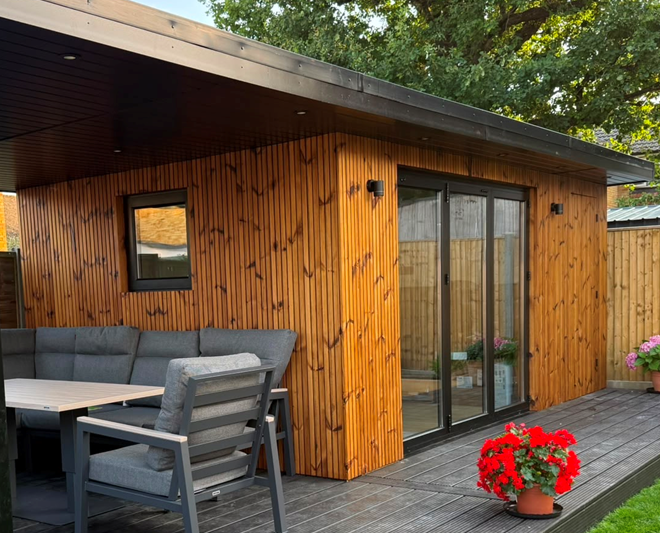
If you’re building a garden sauna, remember that the timber inside and outside is doing two completely different jobs. Aspen and Thermo Aspen are designed for the sauna interior. Externally, you need cladding that’s capable of dealing with the British weather. That opens up plenty of options, including:
- Thermowood Pine cladding
- Thermo Ayous cladding
- Thermo-Ash cladding
- European Larch cladding
- Western Red Cedar cladding
So, you can choose a durable external timber and create a completely different look on the outside while keeping Aspen where its sauna-specific properties really matter.
Looking after Thermo Aspen sauna timber
One of the advantages of Thermo Aspen is that it doesn’t require a complicated maintenance routine. Avoid ordinary varnishes, paints and standard timber coatings inside the sauna. Instead, keep the timber clean by simply wiping the benches and cladding with a damp cloth, and allow the sauna to ventilate and dry properly after use.
Choosing timber for your sauna?
Whether you’re building a compact garden sauna, a home wellness space or specifying timber for a commercial spa, getting the material right at the start makes the rest of the project much easier. Our FSC®-certified sauna cladding and bench slats are held in stock at our Moreton, Essex yard, with UK delivery and click & collect available.
You can browse our full sauna timber range online, order samples to see the timber for yourself, or speak to the Southgate Timber team if you’d like some help working out profiles, lengths and quantities for your project.
FAQ’s
What is the best wood for a sauna?
Aspen and Thermo Aspen are both excellent choices for sauna interiors thanks to properties including their low resin content and low thermal conductivity. Thermo Aspen offers enhanced dimensional stability through thermal modification and has a warmer, darker appearance, while standard Aspen provides a lighter, almost white finish at a lower price point.
What is the difference between Aspen and Thermo Aspen?
Thermo Aspen is Aspen that has undergone thermal modification using heat and steam. This reduces moisture absorption, improves dimensional stability and changes the timber from the pale colour of standard Aspen to a warmer golden-brown tone. Standard Aspen is also suitable for sauna interiors and the Aspen stocked by Southgate Timber is kiln dried to approximately 8% moisture content.
Does sauna timber get hot to touch?
Choosing a timber with low thermal conductivity helps keep contact surfaces comfortable even in the high temperatures found inside a sauna. This is one of the reasons Aspen and Thermo Aspen are particularly well suited to benches, backrests and other areas that come into contact with bare skin.
Is Thermo Aspen suitable for commercial saunas?
Yes. Thermo Aspen can be used for domestic garden saunas, home wellness spaces and commercial sauna and spa projects. Southgate Timber’s Thermo Aspen sauna range is FSC® certified, and we can help with larger project quantities.

General
Recommended for you
View all
SAUNA
What Is the Best Wood for a Sauna? A UK Buyer’s Guide
August 28, 2026
) (Instagram Post (45))_1764080068.png)
Cladding
Cedar Cladding Alternatives (2025 Edition): The Best Budget-Friendly Options for the Same Premium Look
November 25, 2025

Cladding
Western Red Cedar vs Composite Cladding: Which Is Better for Your Project?
June 18, 2026