- TEL : 01277 890 783
- EMAIL : sales@southgatetimber.co.uk
- Collections Monday to Friday 9:00 - 16:00






 Profiles
 Fast and friendly delivery service
 Samples available
 Click & Collect



-
-
-
IPE Hardwood Decking ***FSC®***
-
-
Iroko Hardwood Decking
-
-
Yellow Balau Hardwood Decking ***FSC®*** & SVLK
-
-
Yellow Balau Hardwood Components SVLK
-
-
Jatoba Hardwood Decking ***FSC®***
-

-
Thermory Benchmark Thermo-Ash Decking
-
-
Thermowood Pine Decking PEFC
-
-
Tali Hardwood Decking ***FSC®***
-
-
Thermory Spruce Decking PEFC
-
-
-
-
Western Red Cedar Cladding PEFC
-
-
Cedar Shingles & Ridge Tiles PEFC
-
-
Cedral Cement Board Cladding
-
-
Larch Cladding ***FSC®*** & PEFC
-
-
Douglas Fir Cladding PEFC
-
-
Thermo Ayous Cladding
-
-
Thermowood Pine Cladding PEFC
-

-
Black Cladding PEFC
-

-
Far Eastern Hardwood Cladding PEFC & SVLK
-

-
Thermory Radiata Pine Cladding ***FSC®***
-
-
Thermory Thermo-Ash Cladding
-

-
Thermory Thermo-Ash Decor Rhomb Tiles Internal
-
- SAUNA
- SLEEPERS
-
-
-
Osmo Treatment & Accessories
-
-
Owatrol Treatment & Accessories
-

-
Thermory Treatment & Fixings
-
-
Deckwise Hidden Fixings & Accessories
-
-
Decking Accessories
-
-
Spax Specialist Decking Screws
-
-
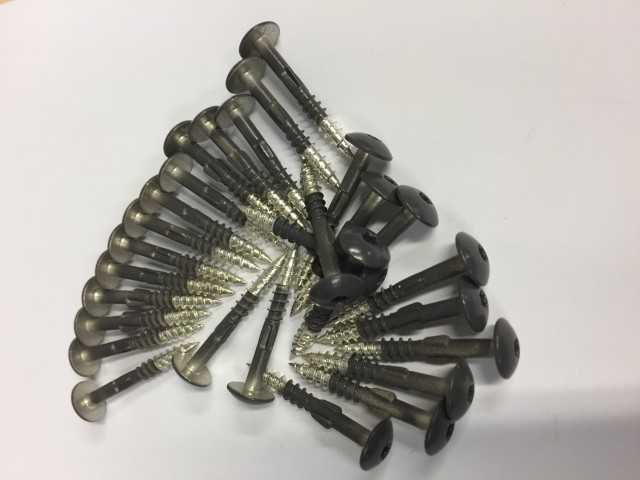
Spax Stainless Steel Facade Screws
-
-
Spax Construction Screws
-

-
Stainless Steel Nails
-
-
Paslode Stainless Steel Brads
-
-
Walther Strong Deck Tape
-
-
Treatment Samples
-
-
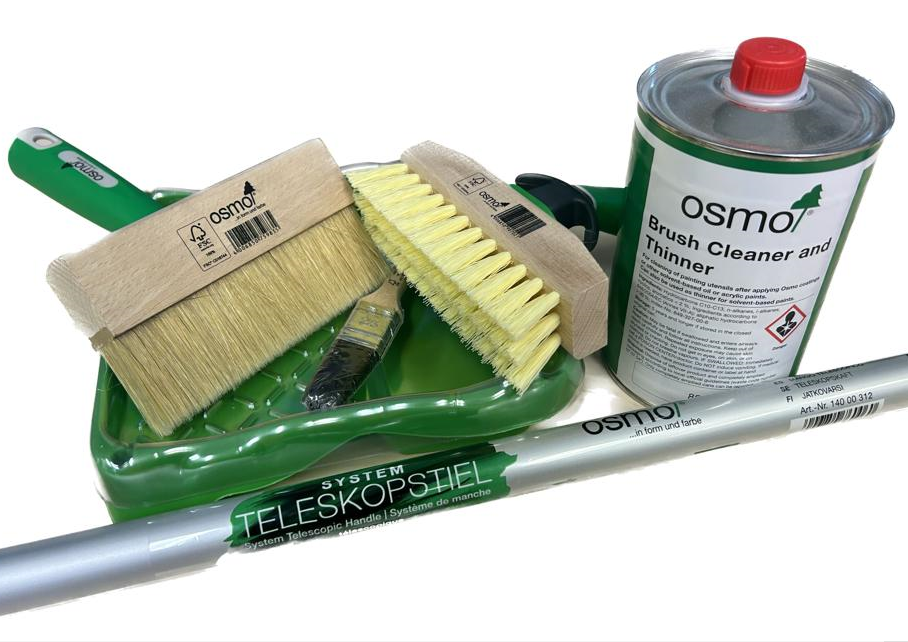
Brushes & Application Tools
-
-
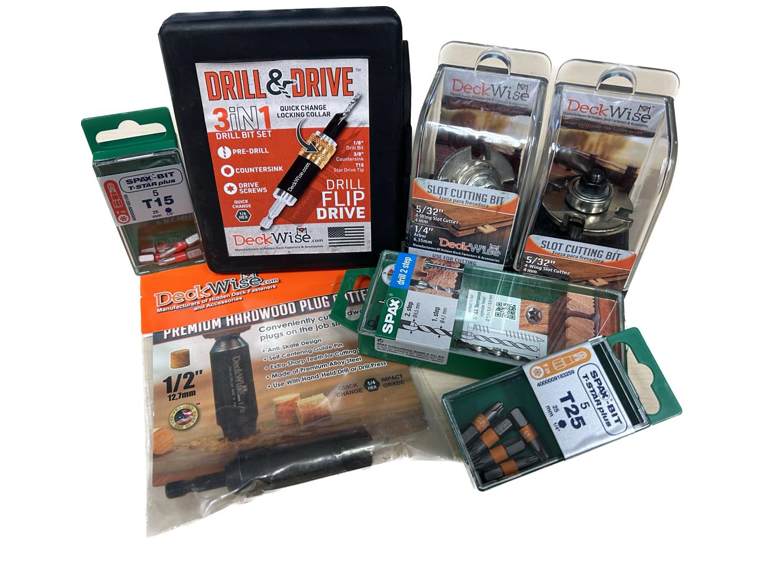
Drive Bits Router Bits & Plug Cutters
-
-
Cedral Accessories
-
- SAMPLES

Is Western Red Cedar Good for Fencing?

by
Southgate Timber
October 22, 2026
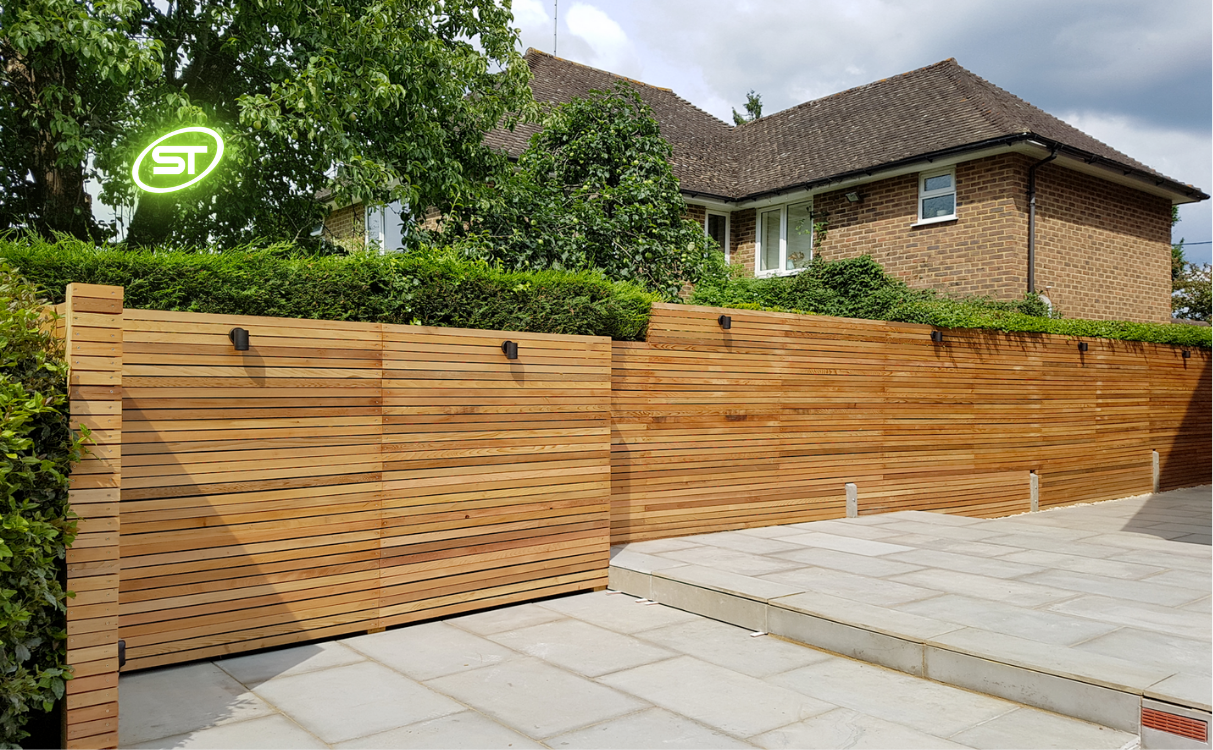


Yes. Western Red Cedar is one of the best timbers you can choose for a fence, because it's lightweight, very stable and naturally durable, so it stays straight and resists rot without needing a preservative treatment. The main things to know are that it's a softwood, so it can dent more easily than a hardwood, and it needs stainless steel fixings to avoid staining. In our latest video, we took a walk around our Cedar warehouse in Moreton to show you the fencing we keep in stock. If you're thinking about a cedar fence, here's what you need to know.
If you're looking for the quick answer
If you want a fence that looks beautiful, stays straight and needs very little upkeep, Western Red Cedar is hard to beat. It's especially well suited to slatted fences and screens, where boards that stay straight keep the gaps even for years. If your fence is likely to take regular knocks, or you're working to a tighter budget, a harder or lower-cost timber may suit you better, and we cover those options below.
Why is Western Red Cedar good for fencing?
There are four main reasons cedar has been a favourite for fencing for so long.
- Natural durability: Western Red Cedar contains natural oils that help it resist decay, so it doesn't need to be pressure treated with preservative before it goes outside.
- Stability: Cedar is one of the most stable timbers we sell. It's much less likely to twist, cup or bow as it gets wet and dries out again, which matters on a slatted fence where every gap is on show.
- Light weight: Cedar is exceptionally light, so it's easy to carry, cut and fix, and it puts less load on your posts and rails.
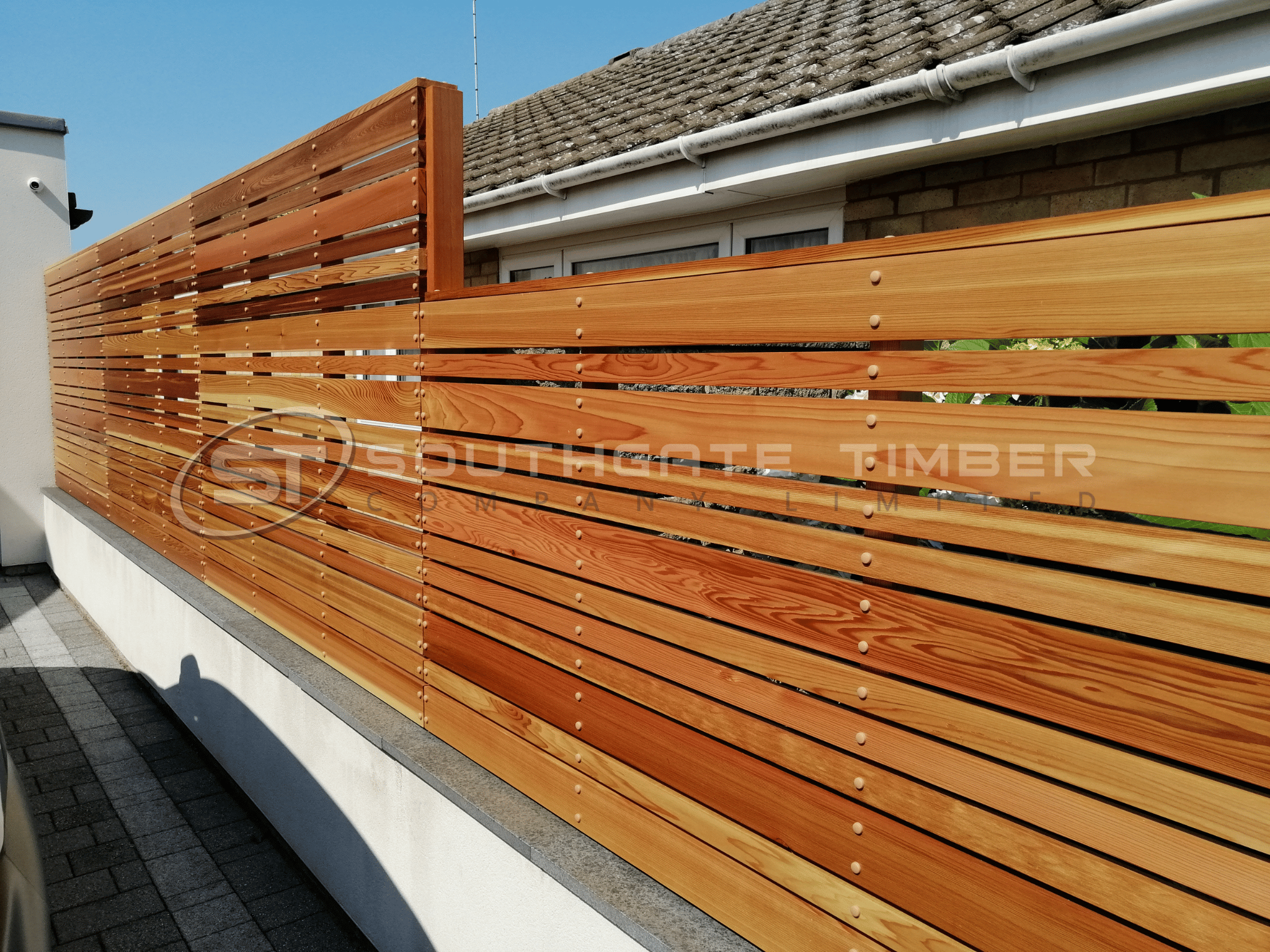
- Appearance: Every board is slightly different, with warm tones ranging from soft pinks to deeper reddish browns. Left untreated, it gradually weathers to an attractive silver-grey.
Are there any downsides to cedar fencing?
Cedar is a softwood, so it can dent or mark more easily than a hardwood such as Yellow Balau or Iroko. On a fence that's likely to be hit by bikes, bins or a lawnmower, that's worth bearing in mind.
It's also a premium timber, reflecting its natural durability, its appearance and the fact that it's imported from Canada. Finally, cedar is rich in natural tannins, which react with ordinary and galvanised steel and leave black streaks down the boards. That's easily avoided by using stainless steel fixings.
What cedar fencing do we stock?
Our Western Red Cedar Fencing & PAR is premium-grade Canadian cedar, certified by the PEFC organisation as sustainably sourced. It's planed all round (PAR), so every face is smooth and ready to use, and it comes in a range of sizes, from slim battens for contemporary slatted screens to wider boards for closer-boarded designs.
We keep it under cover in our warehouses in Moreton, Essex, so it stays dry and straight until it's delivered to you or collected. That's exactly what you'll see in our warehouse tour video.
Do you need to treat a cedar fence?
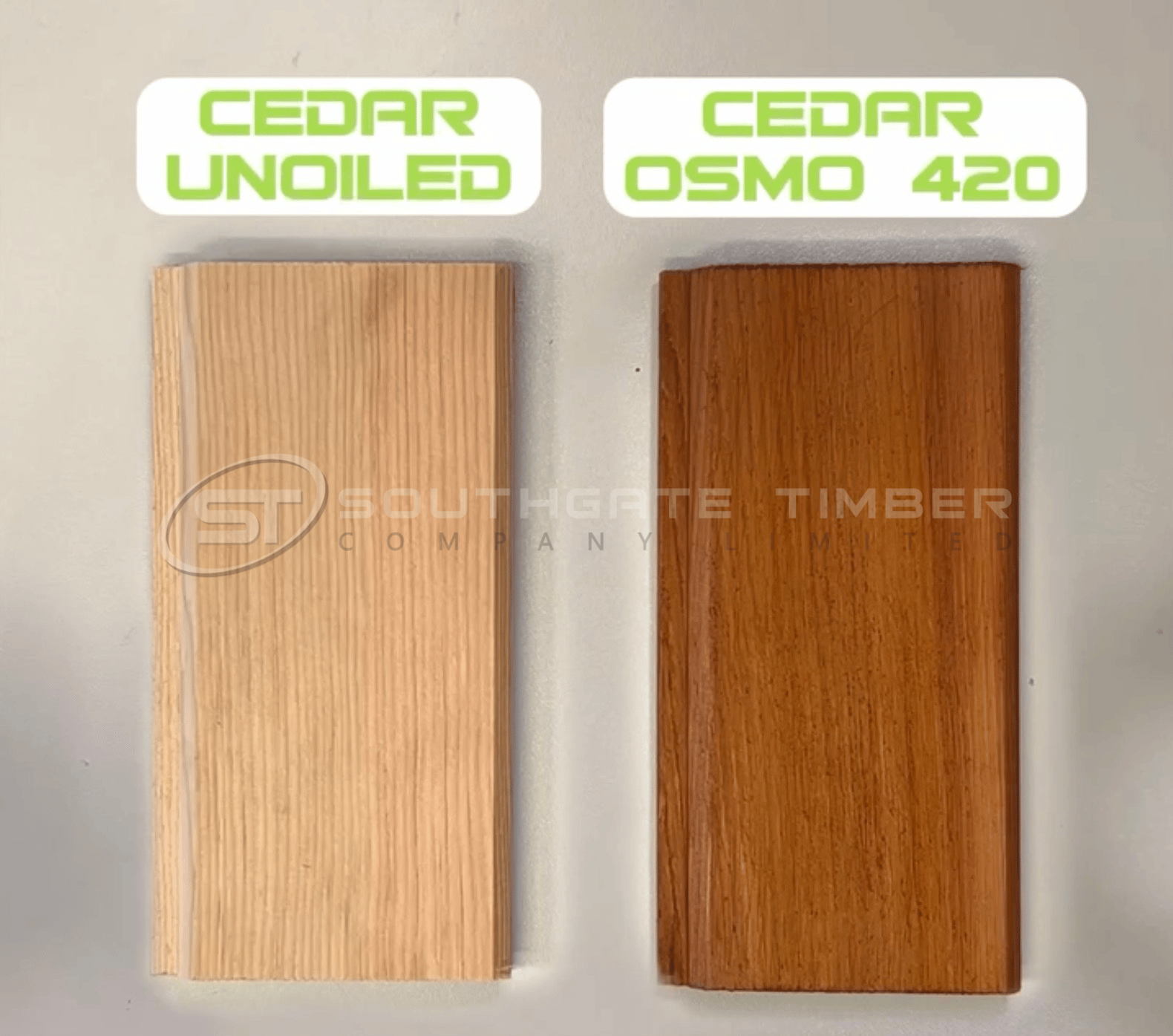
No. Cedar doesn't need a treatment to protect it, and many customers are happy to let it weather naturally to silver-grey. If you'd like to keep more of the original warm colour, a UV-protection oil such as Osmo 420 UV-Protection Oil will help. Lightly sand the boards with 80-grit abrasive before oiling, as freshly planed cedar can have a smooth mill glaze that stops the oil soaking in. You can see how cedar takes the oil in our Larch Vs Cedar Cladding blog.
How long does a cedar fence last?
When it's installed well, a cedar fence will give many years of service. We asked someone who works with cedar fencing every day for their answer, which you can read in our post on how long cedar fencing lasts. The biggest factors are keeping the boards clear of the ground so they can dry out, leaving gaps for air to move, and using stainless steel fixings.
How do you build a cedar slatted fence?
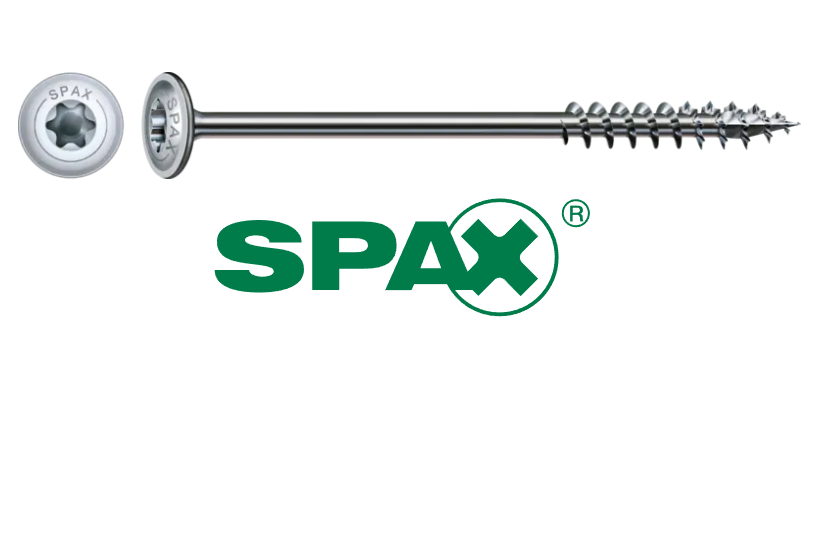
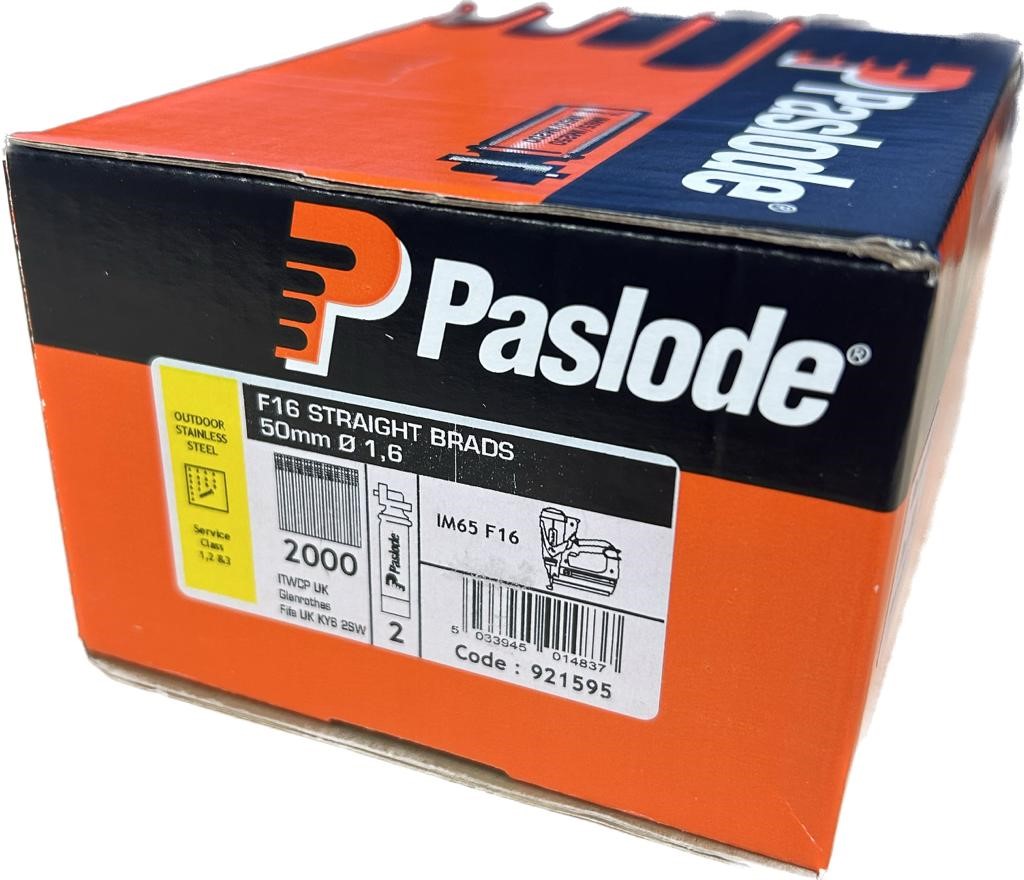
Most cedar slatted fences use a simple frame of posts and rails, with PAR cedar battens fixed horizontally across it and an even gap between each one. A spacer cut from an offcut makes it easy to keep the gaps consistent. Keep the bottom slat clear of the soil, and fix every batten with stainless steel facade screws or nails. For a step-by-step guide, read our beginner's guide to building a fence with PAR battens or see how to build a cedar barcode-style fence.
What if cedar isn't right for you?
If you'd like a similar look at a lower price, Larch and Douglas Fir are both naturally durable softwoods that cost less than cedar. If you want a more consistent colour from board to board, Thermo Ayous is a stable, thermally modified alternative. For a fence that needs to stand up to heavy knocks, a hardwood such as Yellow Balau is the tougher choice. You can compare them all in our Fencing & PAR range.
See our cedar fencing in stock
Watch our warehouse tour video here to see the cedar fencing we keep in stock in Moreton. You can also order samples to see the timber for yourself, and if you're still deciding, our team is always happy to help you choose the right timber for your fence. Browse our full Western Red Cedar fencing range here.
FAQs
Is Western Red Cedar a hardwood or a softwood?
It's a softwood. Despite that, it's naturally more durable than many other softwoods, thanks to the natural oils in the timber.
Does cedar fencing go grey?
Yes. Left untreated, it gradually weathers to a silver-grey colour. A UV-protection oil can help retain more of the original warm colour.
Is cedar fencing more expensive than other timber?
Cedar is a premium timber, so it usually costs more than larch or Douglas fir. You'll find our current prices on our Western Red Cedar fencing page.
What screws should I use for cedar fencing?
Always use stainless steel screws or nails. Ordinary or galvanised fixings react with the natural tannins in cedar and cause black staining.

General


