- TEL : 01277 890 783
- EMAIL : sales@southgatetimber.co.uk
- Collections Monday to Friday 9:00 - 16:00






 Profiles
 Fast and friendly delivery service
 Samples available
 Click & Collect



-
-
-
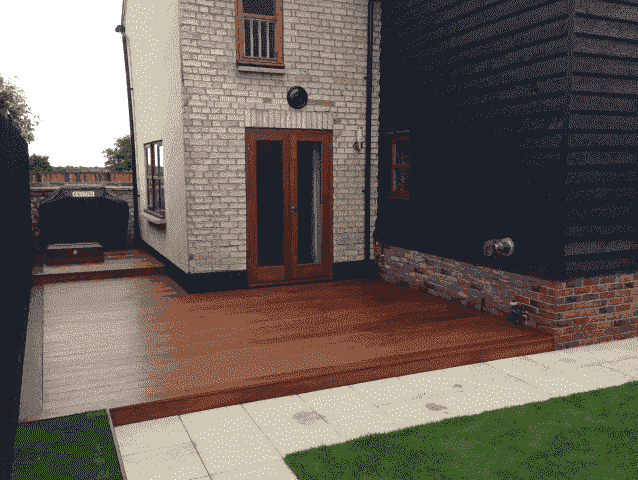
IPE Hardwood Decking ***FSC®***
-
-
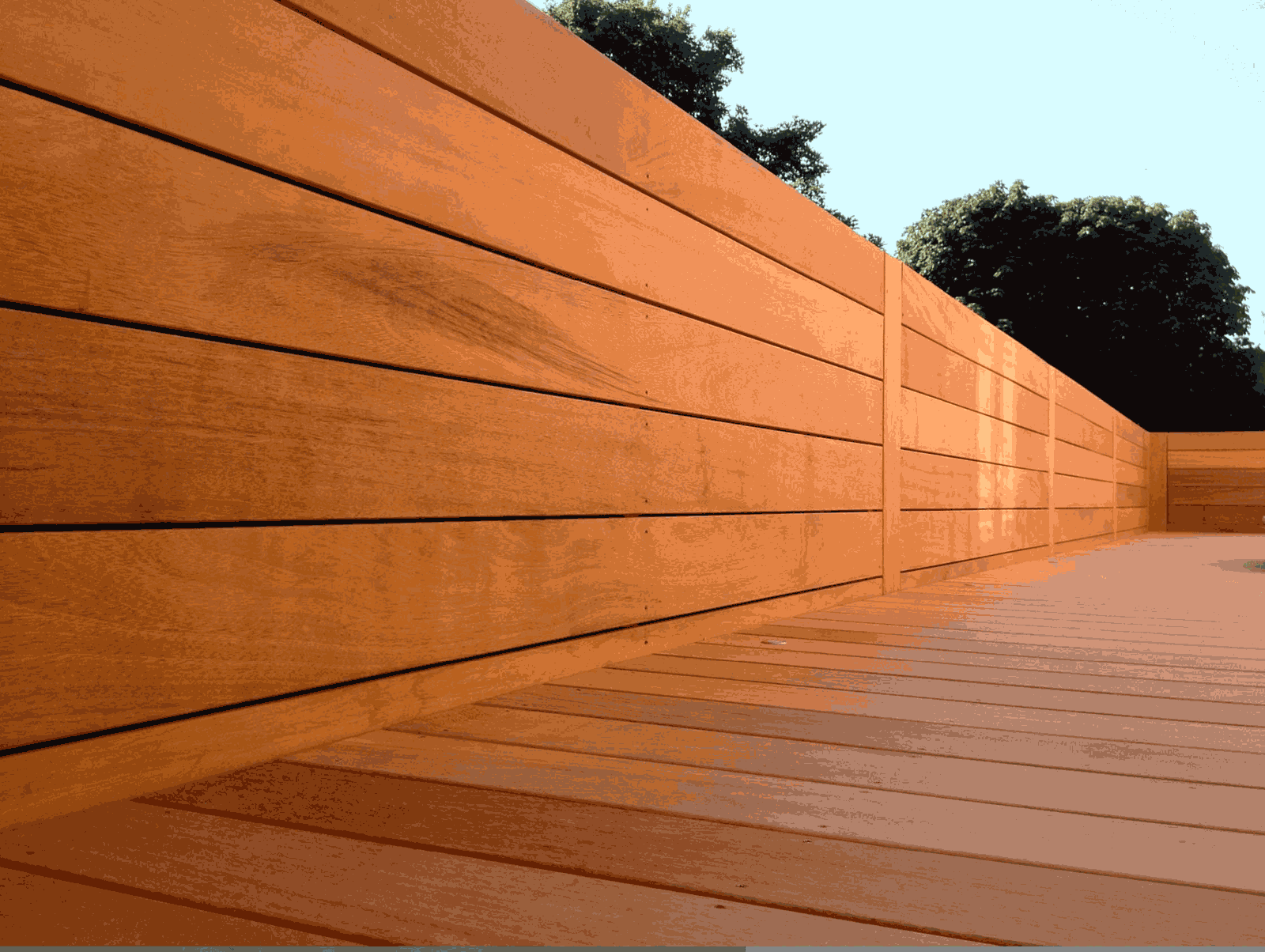
Iroko Hardwood Decking
-
-
Yellow Balau Hardwood Decking ***FSC®*** & SVLK
-
-
Yellow Balau Hardwood Components SVLK
-
-
Jatoba Hardwood Decking ***FSC®***
-

-
Thermory Benchmark Thermo-Ash Decking
-
-
Thermowood Pine Decking PEFC
-
-
Tali Hardwood Decking ***FSC®***
-
-
Thermory Spruce Decking PEFC
-
-
-
-
Western Red Cedar Cladding PEFC
-
-
Cedar Shingles & Ridge Tiles PEFC
-
-
Cedral Cement Board Cladding
-
-
Larch Cladding ***FSC®*** & PEFC
-
-
Douglas Fir Cladding PEFC
-
-
Thermo Ayous Cladding
-
-
Thermowood Pine Cladding PEFC
-

-
Black Cladding PEFC
-

-
Far Eastern Hardwood Cladding PEFC & SVLK
-

-
Thermory Radiata Pine Cladding ***FSC®***
-
-
Thermory Thermo-Ash Cladding
-

-
Thermory Thermo-Ash Decor Rhomb Tiles Internal
-
- SAUNA
- SLEEPERS
-
-
-
Osmo Treatment & Accessories
-
-
Owatrol Treatment & Accessories
-

-
Thermory Treatment & Fixings
-
-
Deckwise Hidden Fixings & Accessories
-
-
Decking Accessories
-
-
Spax Specialist Decking Screws
-
-
Spax Stainless Steel Facade Screws
-
-
Spax Construction Screws
-

-
Stainless Steel Nails
-
-
Paslode Stainless Steel Brads
-
-
Walther Strong Deck Tape
-
-
Treatment Samples
-
-
Brushes & Application Tools
-
-
Drive Bits Router Bits & Plug Cutters
-
-
Cedral Accessories
-
- SAMPLES

Western Red Cedar vs Thermo Ayous: Treating Cladding with Osmo 420

by
Southgate Timber
September 14, 2026
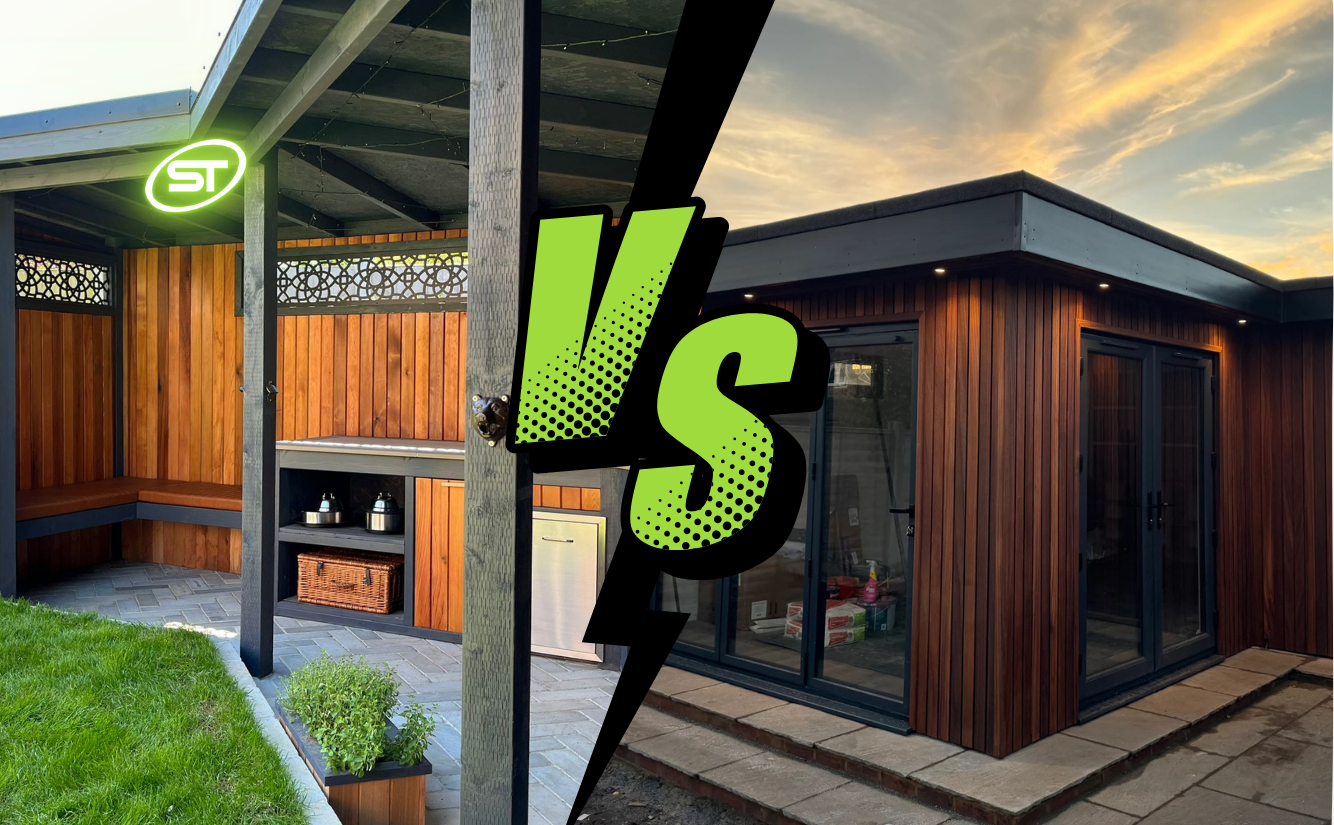


Western Red Cedar and Thermo Ayous are two very different cladding timbers, but there is one thing they have in common: both can be treated with Osmo 420 Clear UV-Protection Oil to help preserve their natural colour. We recently put them side by side and applied Osmo 420 to both. The difference is immediately noticeable. So, if you’re considering Western Red Cedar or Thermo Ayous cladding, what does the treatment actually do, how do the two timbers compare and how much Osmo 420 will you need?
Western Red Cedar vs Thermo Ayous cladding
Both are popular choices for external timber cladding, but they offer quite different appearances.
Western Red Cedar is naturally durable, lightweight and known for its warm colour and natural variation. Individual boards can range from lighter straw and pink tones through to deeper reddish-brown shades, giving a finished elevation plenty of character.
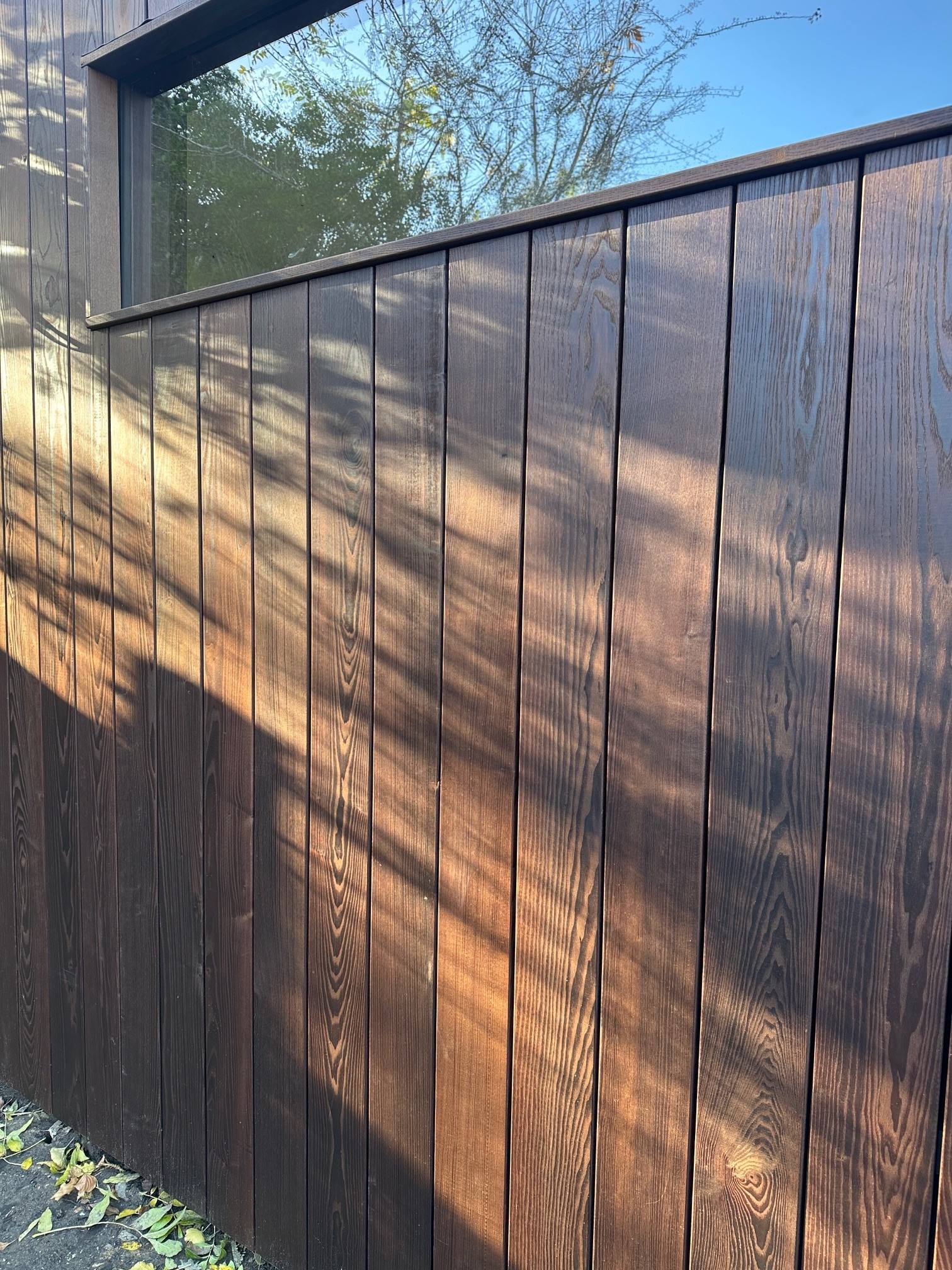
Thermo Ayous is a thermally modified hardwood. During the thermal modification process, the timber is heated at high temperatures in a controlled environment without the addition of chemicals. This improves its dimensional stability and gives the timber its distinctive, consistent brown appearance.
Western Red Cedar offers more natural variation from board to board, while Thermo Ayous provides a more uniform, contemporary finish. However, if either timber is left untreated externally, exposure to UV and the weather will gradually cause its original colour to fade towards a silver-grey appearance. That is where a UV-protection treatment such as Osmo 420 comes in.
What does Osmo 420 UV-Protection Oil do?
Osmo 420 Clear UV-Protection Oil is designed for exterior vertical timber surfaces including cladding, fencing, screens and gates. Unlike a varnish that creates a film over the surface, Osmo 420 is a microporous oil-based finish. This allows the timber to breathe while helping to protect its appearance. When applied as two coats, Osmo states that its UV protection factor is 12 compared with untreated timber. Osmo 420 is intended for surfaces like fencing and cladding, so it shouldn’t be used as a treatment for decking surfaces.
Important to note, this doesn’t mean your cladding will never change colour. Timber is a natural material and will continue to respond to its environment. The purpose of Osmo 420 is to slow the greying process and help the timber retain its natural appearance for longer.
See the difference: Western Red Cedar vs Thermo Ayous with Osmo 420
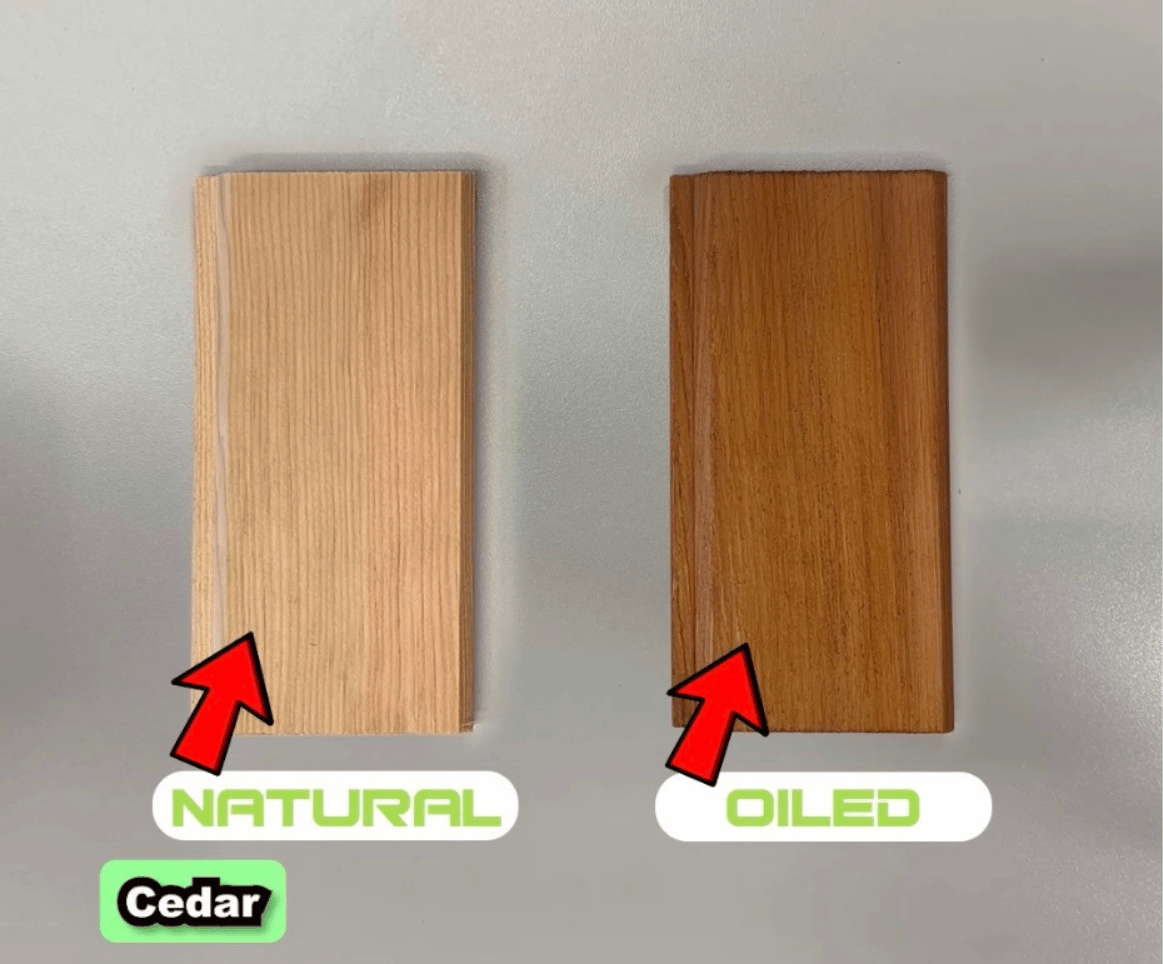
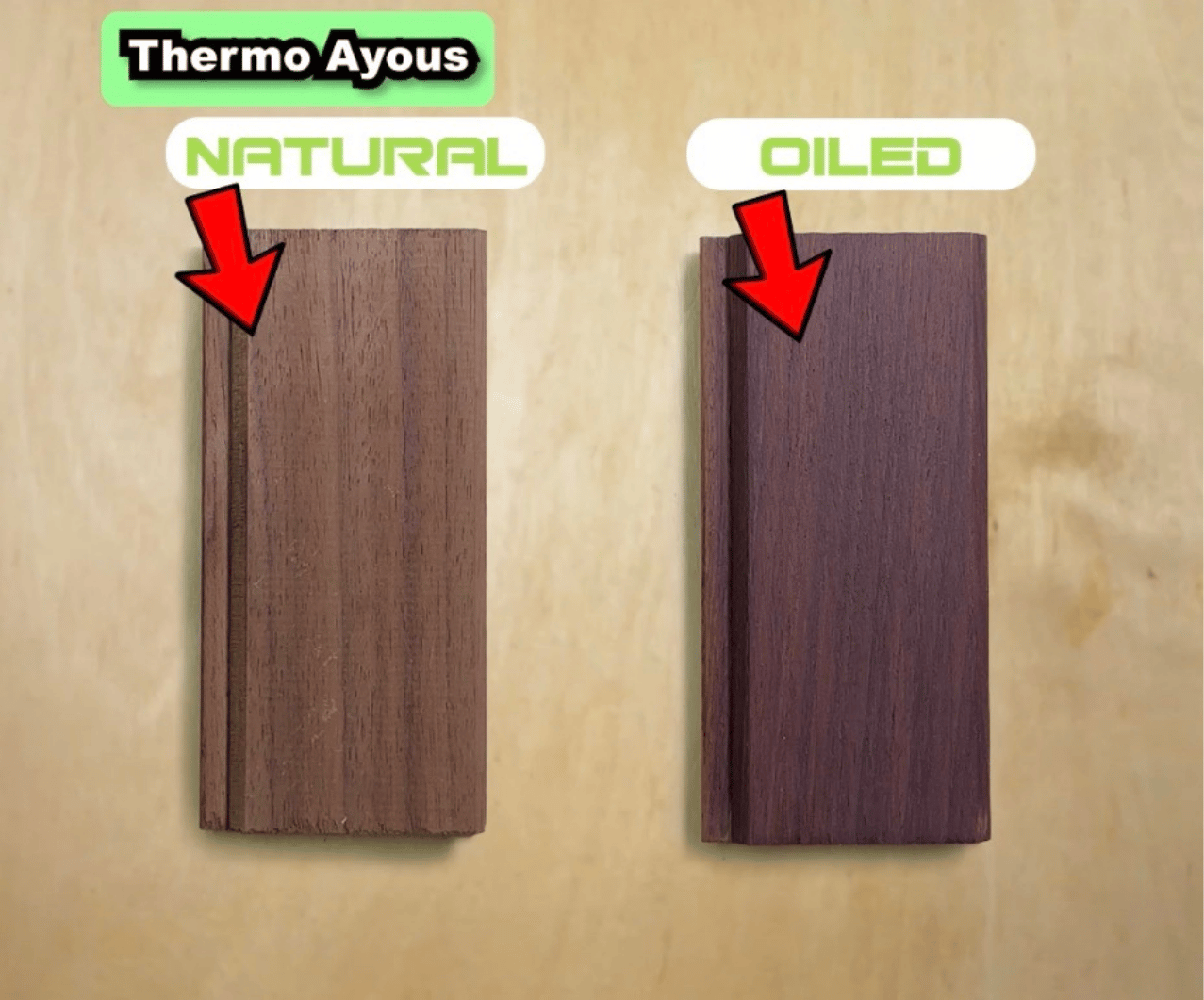
In our latest video, we applied the same Osmo 420 UV-Protection Oil to Western Red Cedar and Thermo Ayous side by side. And this is where you can really see the difference between the two timbers.
On the Western Red Cedar, the oil immediately enhances the natural variation within the board, bringing out the grain and making the warmer red and brown tones much more prominent.
With Thermo Ayous, the effect is more uniform. Its existing brown colour becomes deeper and richer while retaining the cleaner, more consistent appearance that Thermo Ayous is known for.
Neither finish is necessarily better, it comes down to the appearance you want from your cladding.
How much Osmo 420 do I need?
According to the coverage figures used for Osmo 420, you can expect approximately:
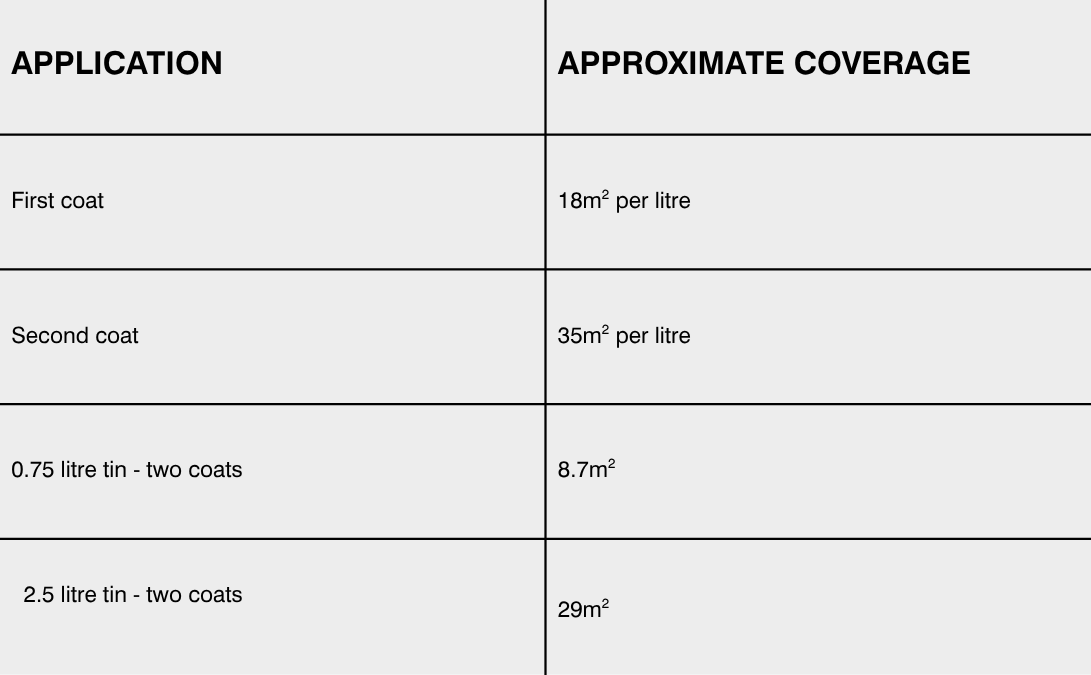
The second coat goes further because the timber has already absorbed much of what it needs during the first application. Remember to allow additional treatment if you’re coating the backs, edges and cut ends of your boards before installation.
Preparing timber before applying Osmo 420
Good preparation is just as important as the treatment itself, and the preparation will depend on whether you’re working with new timber or cladding that has already been installed.
For new timber, we recommend sanding the surface with 80-grit paper using an orbital sander to remove the mill glaze left by the machining process. Once sanded, remove the dust using a lint-free cloth and methylated spirit. The timber is then ready for two coats of Osmo 420, applied according to the instructions on the tin.
If the timber has already been installed for a few months, natural weathering will usually have opened up the surface instead. However, by this point the timber may also have started to turn grey. If it has, use Osmo Wood Reviver Gel to remove the greying and restore the timber before applying Osmo 420.
When can you apply Osmo 420?
Conditions matter when treating exterior timber. Osmo recommends applying the product at temperatures above 10°C, with approximately 10 – 12 hours drying time between coats. You will also want a dry weather window. Damp timber, rain or heavy morning dew can all affect the finish. That makes early autumn an important time to check any existing timber cladding.
If your Western Red Cedar or Thermo Ayous is due a maintenance coat, it’s worth getting the work completed while temperatures and weather conditions still allow.
How often does Osmo 420 need recoating?
The exact maintenance period will depend on the position of the cladding and how exposed it is to sunlight and weather. A south- or west-facing elevation, for example, is likely to experience more UV exposure than a sheltered wall.
One advantage of an oil-based treatment is that maintenance is relatively straightforward. Provided the existing finish is sound and the surface is properly cleaned, you don’t normally need to strip an old film coating before applying a maintenance coat. Regularly checking your cladding will help you spot when the finish is beginning to fade rather than waiting until the timber has weathered significantly.
Should you choose Western Red Cedar or Thermo Ayous?
There isn’t one answer for every project.
Choose Western Red Cedar if you want a premium natural timber with plenty of character and variation. Its mix of warm reddish, brown and lighter tones creates an elevation where individual boards remain part of the overall appearance. Western Red Cedar is also lightweight, naturally durable and easy to work with, which has made it one of the most established timber cladding choices in the UK.
Choose Thermo Ayous if you prefer a more uniform, contemporary appearance. Its thermal modification gives the timber excellent dimensional stability and a much more consistent brown colour, making it particularly effective across clean architectural elevations and longer runs of cladding.
Whichever you choose, treating the timber with Osmo 420 can help preserve the colour that made you choose it in the first place.
FAQ’s
Do I have to treat Western Red Cedar or Thermo Ayous?
No. Both timbers can be used externally without applying a coating. If left untreated, however, exposure to UV and weather will gradually change their appearance towards a silver-grey patina. Treatment is primarily about helping to retain their original colour for longer.
Can I apply Osmo 420 in autumn?
Yes, providing conditions meet the manufacturer’s requirements. The temperature should remain above 10°C during application and the timber needs sufficient dry conditions between coats.
Can I apply Osmo 420 to cladding that has already gone grey?
If your cladding has already started to grey, the weathered surface needs to be restored before applying Osmo 420. Use Osmo Wood Reviver Gel to remove the greying, then allow the timber to dry thoroughly before applying the treatment
Western Red Cedar, Thermo Ayous and Osmo treatments at Southgate Timber
We stock a range of Western Red Cedar cladding and Thermo Ayous cladding, along with matching profiles for other exterior timber projects. You’ll also find Osmo 420 Clear UV-Protection Oil and the wider range of Osmo timber treatments available from Southgate Timber. Not sure which timber is right for your project? Order samples first and compare them at home, and if you’re considering treating the timber, you can test the finish with a sample sachet before committing to an entire elevation.

General


