- TEL : 01277 890 783
- EMAIL : sales@southgatetimber.co.uk
- Collections Monday to Friday 9:00 - 16:00






 Profiles
 Fast and friendly delivery service
 Samples available
 Click & Collect



-
-
-
IPE Hardwood Decking ***FSC®***
-
-
Iroko Hardwood Decking
-
-
Yellow Balau Hardwood Decking ***FSC®*** & SVLK
-
-
Yellow Balau Hardwood Components SVLK
-
-
Jatoba Hardwood Decking ***FSC®***
-

-
Thermory Benchmark Thermo-Ash Decking
-
-
Thermowood Pine Decking PEFC
-
-
Tali Hardwood Decking ***FSC®***
-
-
Thermory Spruce Decking PEFC
-
-
-
-
Western Red Cedar Cladding PEFC
-
-
Cedar Shingles & Ridge Tiles PEFC
-
-
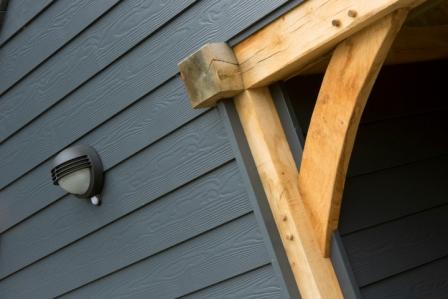
Cedral Cement Board Cladding
-
-
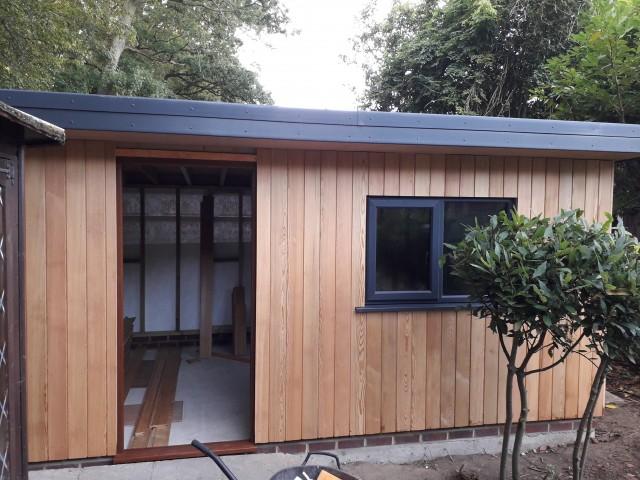
Larch Cladding ***FSC®*** & PEFC
-
-
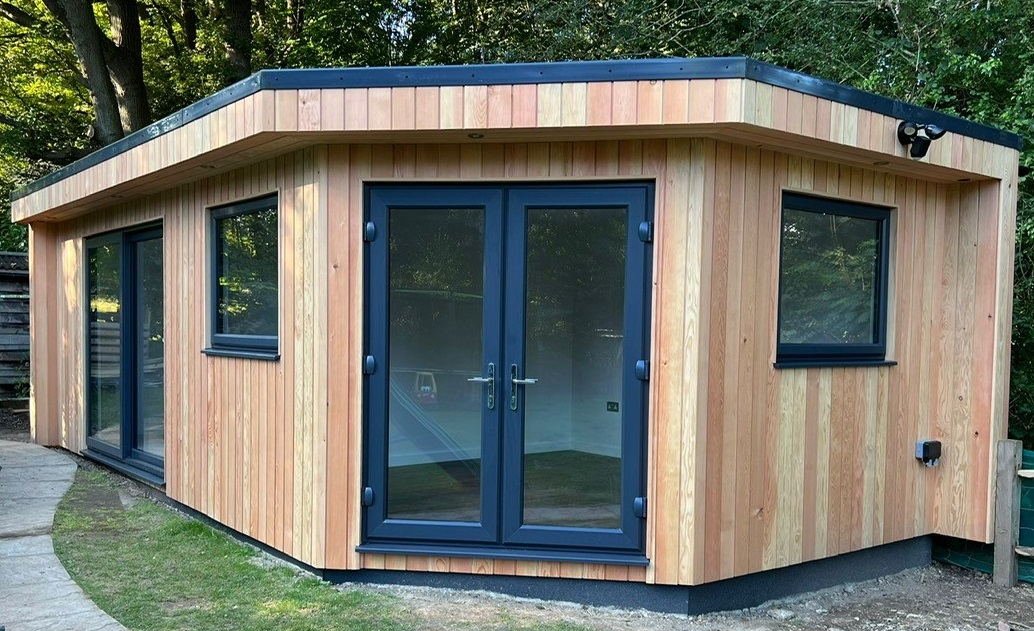
Douglas Fir Cladding PEFC
-
-
Thermo Ayous Cladding
-
-
Thermowood Pine Cladding PEFC
-
.jpg)
-
Black Cladding PEFC
-

-
Far Eastern Hardwood Cladding PEFC & SVLK
-

-
Thermory Radiata Pine Cladding ***FSC®***
-
-
Thermory Thermo-Ash Cladding
-

-
Thermory Thermo-Ash Decor Rhomb Tiles Internal
-
- SAUNA
- SLEEPERS
-
-
-
Osmo Treatment & Accessories
-
-
Owatrol Treatment & Accessories
-

-
Thermory Treatment & Fixings
-
-
Deckwise Hidden Fixings & Accessories
-
-
Decking Accessories
-
-
Spax Specialist Decking Screws
-
-
Spax Stainless Steel Facade Screws
-
-
Spax Construction Screws
-

-
Stainless Steel Nails
-
-
Paslode Stainless Steel Brads
-
-
Walther Strong Deck Tape
-
-
Treatment Samples
-
-
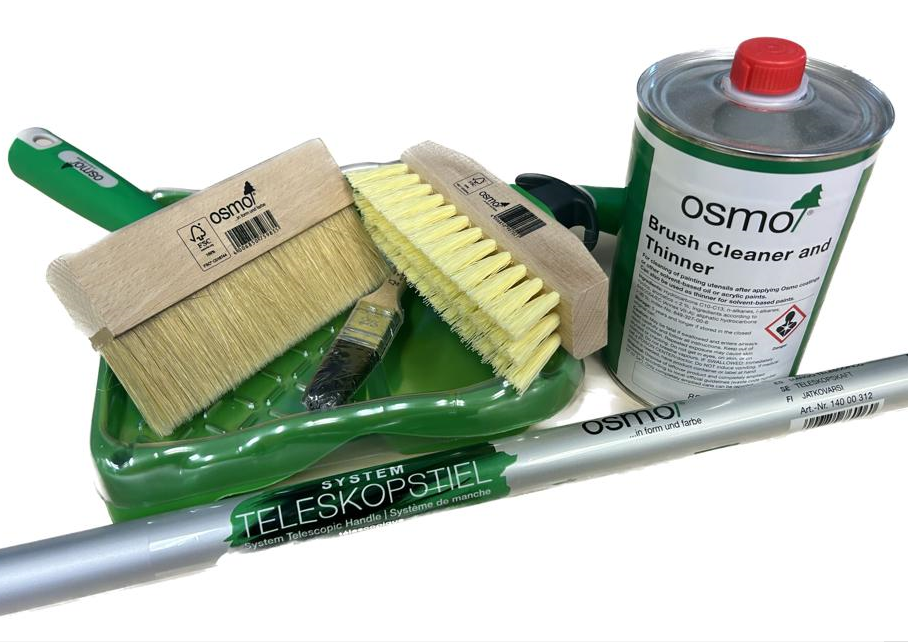
Brushes & Application Tools
-

-
Drive Bits Router Bits & Plug Cutters
-
-
Cedral Accessories
-
- SAMPLES

Black Cladding: A Complete Guide to Design, Materials and Installation

by
Southgate Timber
July 30, 2026
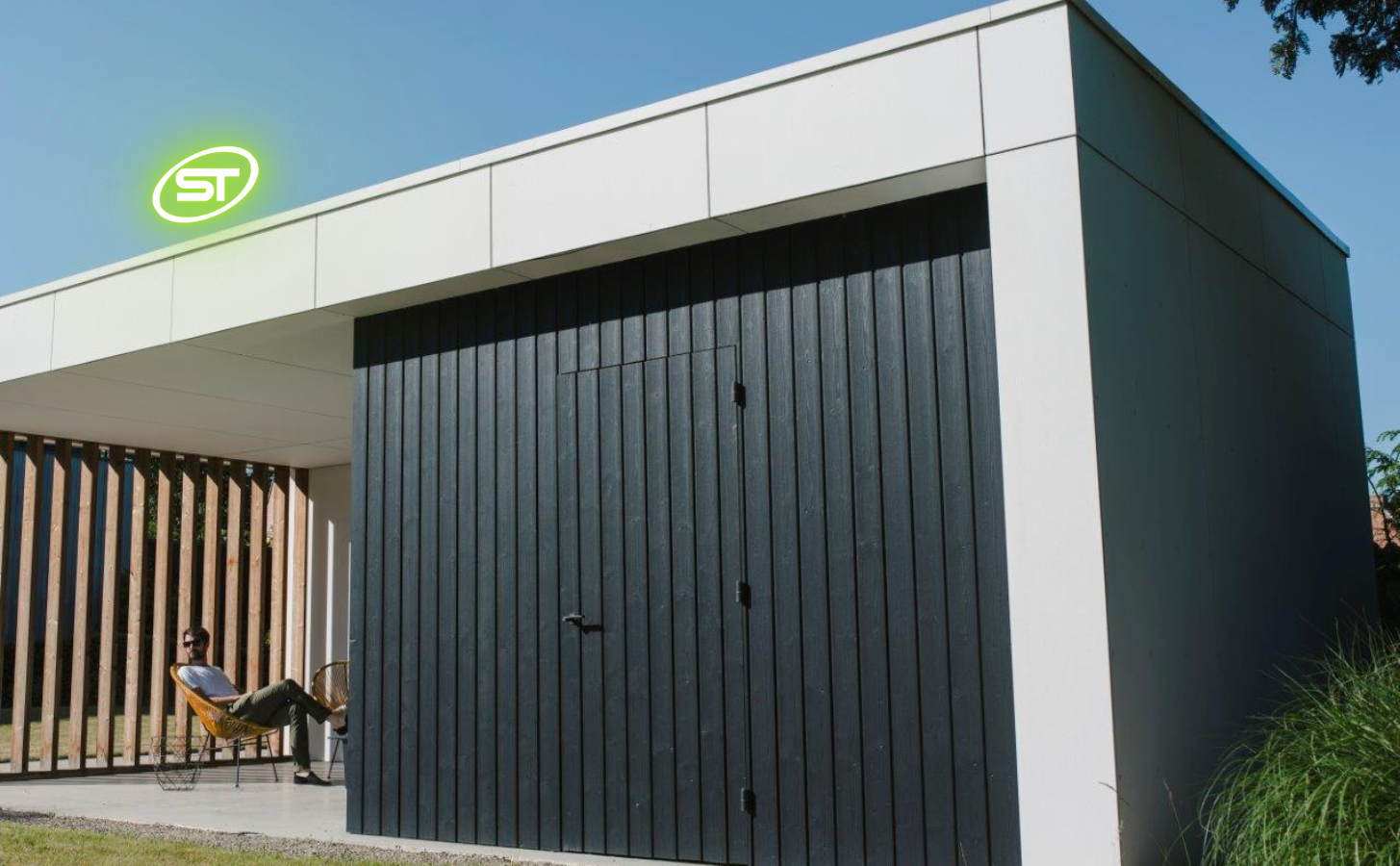


Black cladding has gone from architectural statement to default choice on new-build extensions, garden rooms and self-builds across the UK, and it's easy to see why. It's bold without being loud, it sits well against almost any planting scheme or glazing style, and, specified correctly, it's one of the lowest-maintenance ways to finish an exterior. But "black cladding" covers a lot of ground, from tar-dipped Scandinavian timber to painted composite boards, and the differences matter more than most buying guides let on. As a timber merchant who stocks and cuts this material every day, here's what we think is actually worth knowing before you spec it.
Why black cladding works
Black absorbs rather than reflects, which is exactly why it reads as dramatic against greenery, brick or glass. Where a natural timber facade tends to soften a building's lines, a black one sharpens them: it's the choice to reach for when you want a structure to look considered rather than blended in. It lets a smaller structure hold its own visually against the main house rather than disappearing next to it.
That heat absorption cuts both ways, though. It’s part of why black cladding looks so striking, but it also means the boards run hotter through summer than a pale or unfinished facade would. Properly dried and thermally modified timber handles that heat cycling well, but timber that hasn’t been conditioned properly can move, cup or pull away from the wall within a couple of seasons of hot summers and damp winters. It’s another reason the quality of the timber underneath the coating matters as much as the coating itself.
There's a practical case too. A factory-applied opaque black finish doesn't rely on the wood's own colour holding up over time, which natural or lightly-oiled timber can struggle with in the UK climate. You get a genuinely consistent, uniform colour from the day it's fitted, rather than the patchy weathering you sometimes see with unfinished cladding species.
What black cladding is actually made from
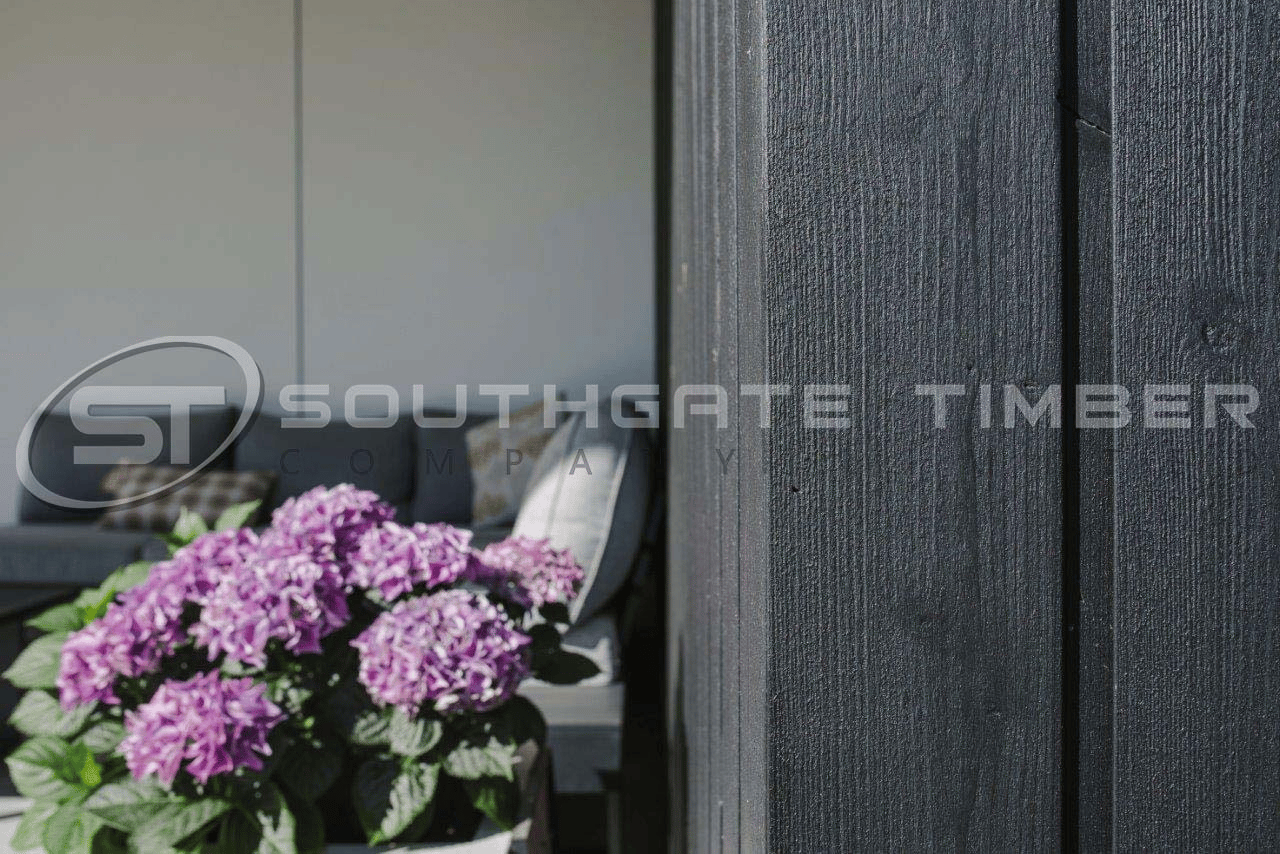
Most of what's sold as black cladding in the UK today, including our own range, is thermally modified softwood, typically Spruce or Pine, finished at the factory with an opaque black coating. Thermal modification is a heat treatment process (no chemicals involved) that alters the timber's cell structure, making it more dimensionally stable and considerably more resistant to rot and insect attack than untreated softwood. It's what allows a relatively affordable species like Spruce to perform at a level closer to a naturally durable hardwood.
The coating itself matters as much as the timber underneath. A good factory-applied opaque finish is baked or cured onto every face of the board before it reaches site, rather than painted on afterwards. This is why we're happy to quote a genuine service life for the coating on the boards we sell, often 10 years or more!
This is where a lot of “black cladding” on the market cuts corners. Plenty of what’s sold cheaply starts life as ordinary whitewood softwood with a heavy coat of black paint applied to make it look weatherproof. It isn’t. Without thermal modification, that timber will cup, twist and shrink with sun and moisture exposure, and once it starts pulling away from the coating it can’t be restored, only replaced. Thermally modifying the timber first, as with our own Spruce range, is what actually gives the board long-term stability.
Profiles: which one, and why it matters
Two profiles dominate the black cladding market:
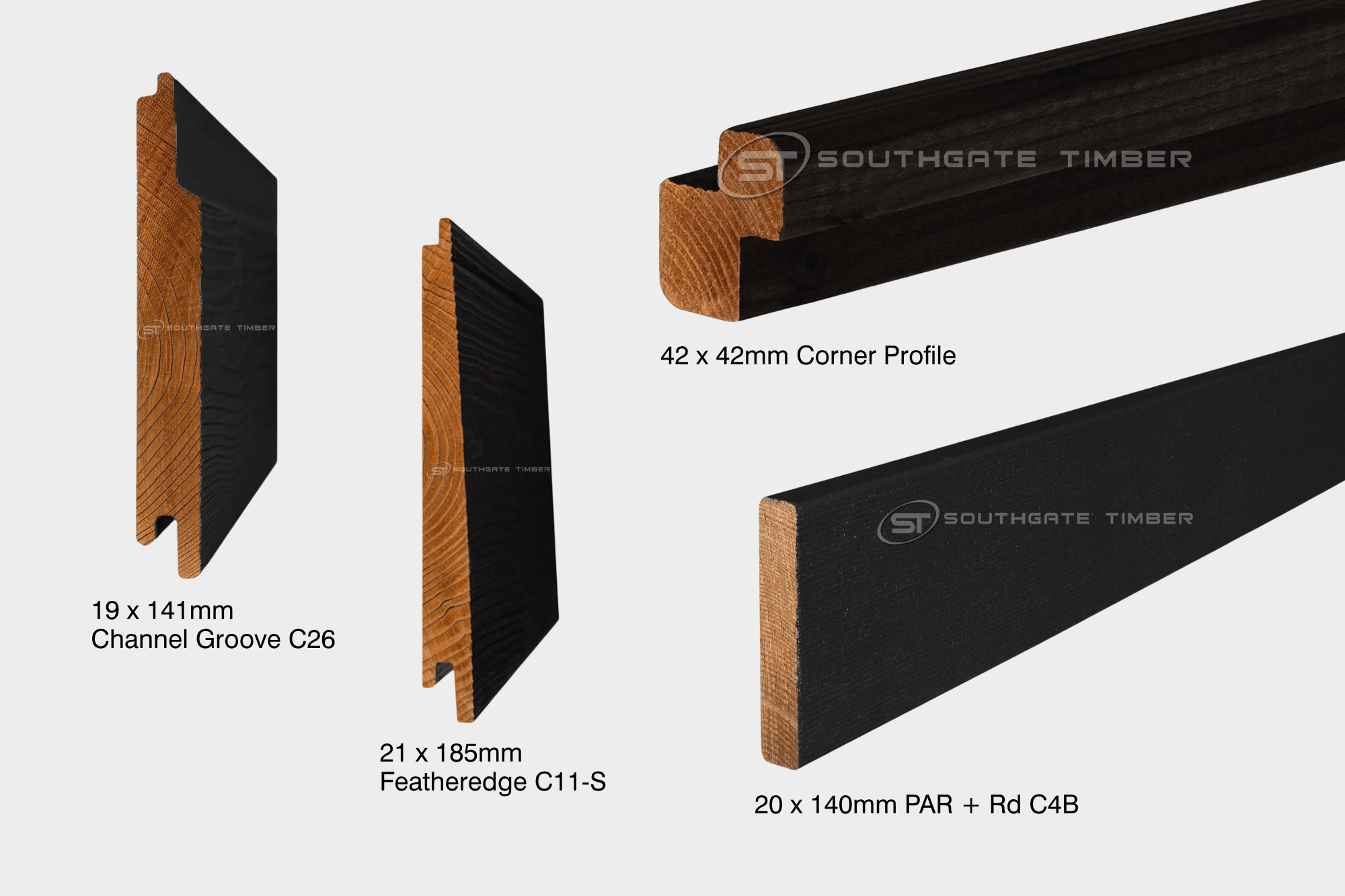
- Channel groove is the more contemporary option. Clean vertical or horizontal lines with a shadow-gap groove running along each board. A crisp and architectural look that works well on both traditional and modern builds because the detailing is subtle rather than rustic.
- Featheredge is the traditional choice, tapered from thick to thin along its width so each board overlaps the one below it, always fitted horizontally. It's the profile most associated with the "black barn" aesthetic, agricultural buildings reimagined for a garden room or extension, and it tends to suit period properties or rural settings better than channel groove does. Featheredge's overlap gives it slightly more forgiving weather resistance on more exposed elevations.
Beyond the two headline profiles, we also stock a 20 × 140mm PAR + Rd board and a matching 42 × 42mm corner profile. The PAR + Rd isn’t really a third facing option to choose between over channel groove or featheredge; it’s typically cut to width on-site with a table or skill saw and used for door and window reveals, though it also works well as a decorative matching slatted fence near the cladding. The corner profile is for the external 90 degree corners of the building, and getting that detail right is one of the things that separates a tidy finished job from one that looks improvised on site, worth planning for at the quoting stage rather than as an afterthought.
Fixing and detailing: where most problems actually start
Almost every complaint about cladding failure (staining, premature coating breakdown, boards cupping) traces back to detailing. Two things matter more than anything else:
- Ventilation behind the boards – Cladding needs to breathe. A battened, ventilated cavity behind the boards lets moisture that gets past the face evaporate rather than sit and cause problems. We also stock a perforated closure trim that finishes off the top and bottom of a run, keeping pests and debris out of the cavity without blocking the airflow it needs.
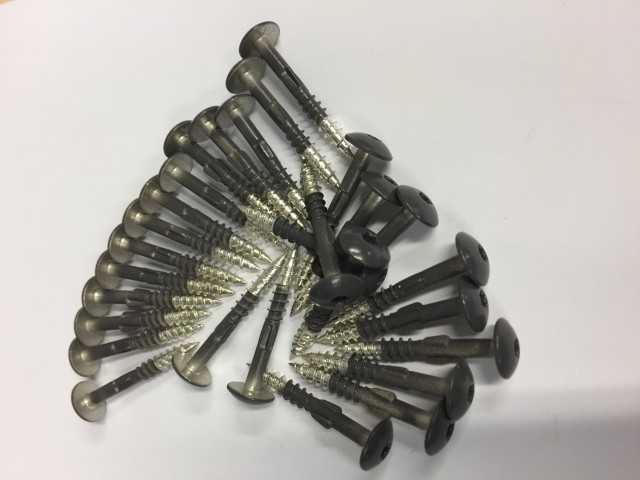
- Stainless steel fixings – Standard galvanised nails or screws corrode over time and leave visible black or rust-coloured streaks. On a black finish the staining is less visually obvious than on pale timber, but the corrosion problem is identical. Stainless steel annular ring nails or stainless facade screws are worth the modest extra cost, every time. We stock Spax Stainless BLAX facade screws with black heads specifically for black cladding in 4.0 × 45mm and 4.5 × 50mm, alongside the boards themselves, so it’s easy to spec the whole job correctly in one order.
Maintenance: what to actually expect
A factory-finished black cladding board doesn’t need oiling, it arrives ready to fit. Over its lifespan, the coating will eventually need refreshing to keep the colour looking rich rather than faded. How soon depends on aspect and exposure: a south-facing wall in direct sun will need attention sooner than a sheltered north elevation. For our own Black Cladding range, we stock the matching Thermory Vivid Black RAL 9005 touch-up paint in 0.9 litre tins, so knocks, scuffs and general fading can be spot-treated with the exact factory finish rather than a close approximation.
What it costs
Black cladding sits in the mid-range of the timber cladding market. You're paying a premium over an unfinished or lightly-oiled species because of the thermal modification process and the factory-applied coating, but you're not paying hardwood prices. Expect a noticeably lower cost than naturally durable softwoods like Western Red Cedar in its premium grades, while sitting above the cheapest unfinished softwood options.
Pricing is normally quoted per linear metre for the board itself, but per m² is the more useful figure for comparing between profiles and species, since cover width varies. Being a trade-focused website, our prices are + vat but we give a final figure including vat on checkout.
Our Black Cladding range
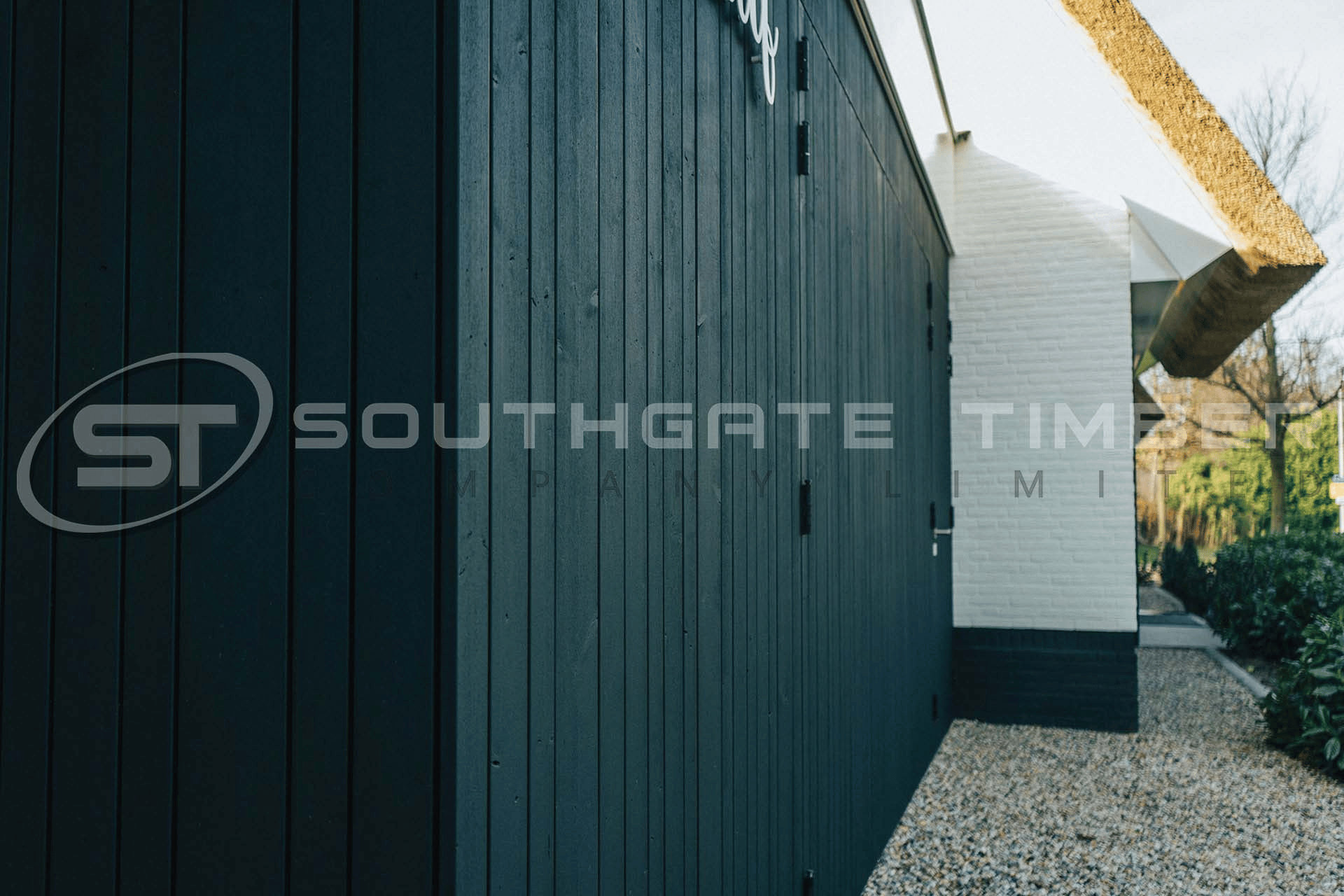
Our Black Cladding is thermally modified Spruce with a factory-cured opaque finish on every face, available in four profiles so you can match the detailing to the project rather than compromise on it:
Because it's factory-modified and finished rather than site-treated, it arrives ready to fit with no oiling or staining required, and it carries the kind of coating longevity discussed above. If you're planning a project, we'd rather talk through profile choice, coverage and fixing detail with you directly than have you guess from a spec sheet. Browse current stock, sizes and pricing on our Black Cladding Category page or get in touch and we'll help you get the order right first time.
Black cladding vs. the alternatives
It's worth being clear-eyed about what else achieves a similar look, because "black cladding" gets used loosely, and we'd rather point you to the right product than sell you the wrong one.
- Composite cladding in black tones gives a similar visual with less maintenance day-to-day, but a noticeably less natural texture and a materially higher price point in most ranges. During prolonged periods of high heat, composite materials typically expand and contract more than thermally modified timber, which can place greater stress on fixings and joints over time.
- Painted or stained natural timber (rather than factory opaque-coated) can achieve a comparable colour but typically needs more frequent recoating.
- Naturally dark species, like some grades of thermally modified ash, give a deep brown to black without any applied coating at all. It’s a genuinely different material proposition worth considering if long-term coating maintenance is a concern.
Getting it right
If you're specifying for a project and want to talk through profile choice, coverage or fixing detail for your specific build, our team is happy to help you get the numbers and the detailing right before you order. Take a look at our Black Cladding range for current stock, sizes and pricing.
FAQs
Is black cladding more high-maintenance than natural timber cladding?
No, it’s ready to fit and needs no initial staining or oiling. The coating will need refreshing over time, same as any coated timber.
What's the difference between channel groove and featheredge profiles?
Channel groove gives clean, contemporary vertical or horizontal lines with a shadow-gap groove; featheredge is the tapered, overlapping traditional profile associated with the "black barn" look. Choice comes down to aesthetic and, to a lesser extent, exposure on the wall in question. We stock both, plus a PAR + Rd option and a matching corner profile.
What fixings should I use?
Stainless steel annular ring nails or stainless facade screws. Standard galvanised fixings corrode over time and can stain the boards.
Is black cladding more expensive than other timber cladding?
It sits in the mid-range: a premium over unfinished softwood because of the thermal modification and factory coating, but well below premium species like Western Red Cedar.

General
Recommended for you
View all
Cladding
Choosing Your Cladding
May 22, 2024

Cladding
Transforming Modern Architecture With Timber Cladding
August 09, 2024

Cladding
The Rise of Thermally Modified Timber: A Sustainable Choice for Cladding and Fencing
August 23, 2024